Posts in life
How to Know, Respect, and Connect Yourself

In a world that often prioritizes speed, productivity, and conformity, it's easy to feel disconnected from our true selves. We often rush through life, barely pausing to reflect on who we are, what we value, and what brings us joy. This reality impacts everyone, regardless of their operating system. The Root Down process will help us better understand ourselves, respect our unique qualities, and forge deeper connections with others.

Understanding the Root Down Process

The Root Down process is a concept inspired by the experiences of individuals with ADHD, who often struggle to fit into a neurotypical world. My method encourages self-discovery, self-respect, and improved connections with others.

Here’s how it works.

Know Yourself - Understanding oneself is the foundation of personal growth and well-being. Knowing your strengths, weaknesses, interests, and values clarifies decision-making and helps you navigate life more effectively. For individuals with ADHD, this self-awareness is often heightened due to the daily challenges we face. However, anyone can benefit from taking time to explore their inner landscape.

When you know yourself, you can make choices that align with your true nature. This reduces inner conflict, boosts self-confidence, and increases overall life satisfaction.

Respect Yourself - Self-respect is the cornerstone of mental and emotional health. It means accepting yourself as you are, flaws and all. The ADHD community often faces stigmatization and misunderstanding, making self-acceptance challenging. Nonetheless, it's a vital step in the Root Down process.

Respecting yourself fosters self-esteem, resilience, and a sense of empowerment. It allows you to set healthy boundaries, say no when necessary, and prioritize your well-being.

Connecting Yourself - Humans are inherently social beings. Building meaningful connections with others is essential for emotional health and personal growth. However, these connections must be based on authenticity, not masks. We must seek out like-minded individuals who understand our unique challenges.

Authentic connections provide emotional support, reduce feelings of isolation, and enrich your life with diverse perspectives and experiences.

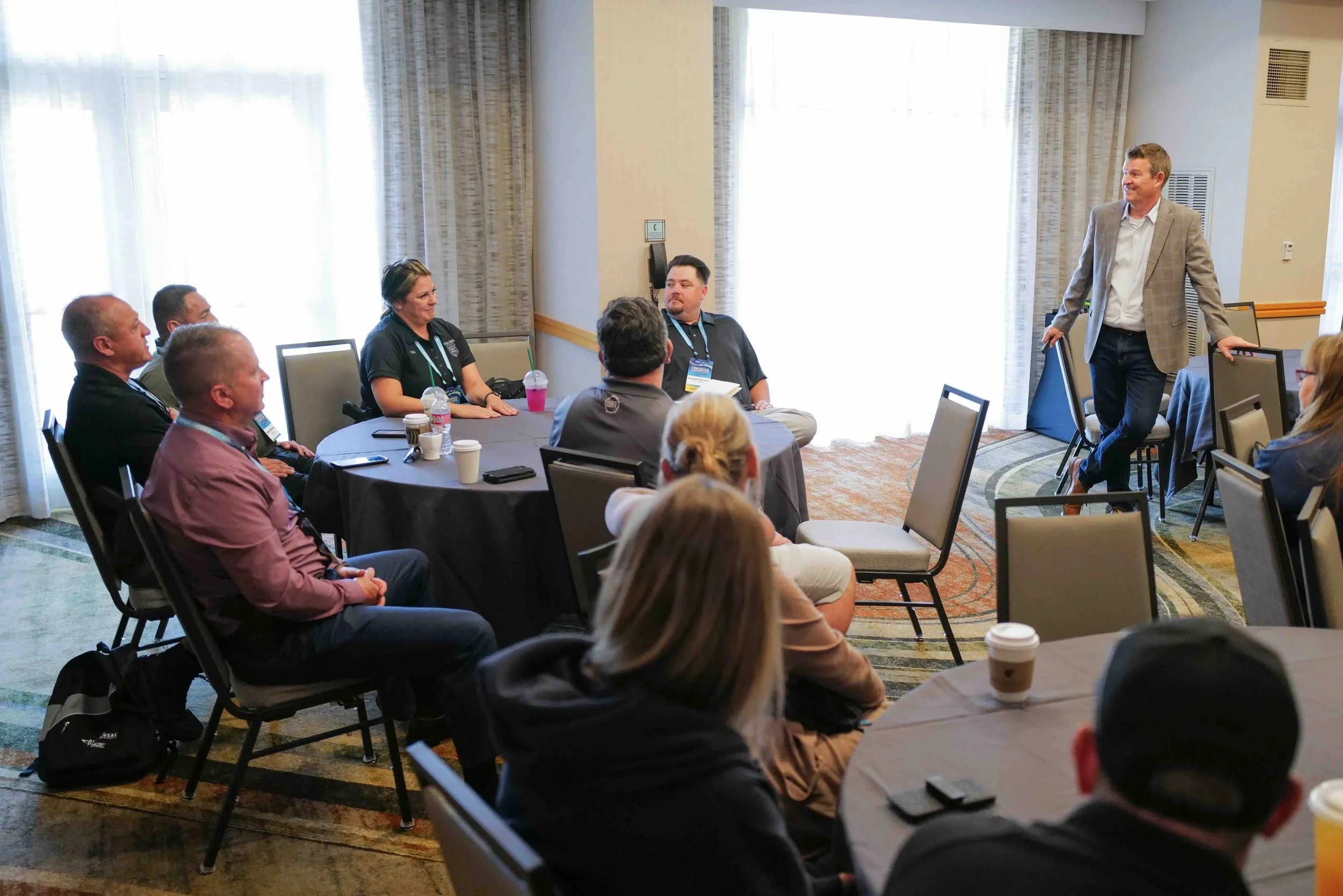
The Root Down will transform your workplace team or conference audience. Learn more and say hello here.

Me and ADHD: I'm at the Start of a Journey I've Been on All My Life

I have attention-deficit/hyperactivity disorder (ADHD); it's official. If you know me well, you'll smile knowingly as you sit back and think, oh, okay, that makes so much sense! 

I recently read, “People living with ADHD may have a variety of skills and abilities beyond those of their neurotypical counterparts. These may include hyperfocus, resilience, creativity, conversational skills, spontaneity, and abundant energy.” Does this sound like me? I’m a wise squirrel!

Heather had already assumed I had ADHD and repeatedly mentioned it to me over the years. She's a school teacher who has worked with hundreds (maybe thousands) of children of all types and knows the signs. Sidenote: Always listen to your spouse. ;)

Reflecting on my ADHD symptoms made me quite certain, and my doctor recently confirmed it. 

Do any of these ADHD symptoms sound familiar? 

  • Distractible

  • Impulsive

  • Hyperactive

  • Restless

  • Disorganized

  • Inattentive

  • Impatient

  • Fidgety

  • Forgetful

  • Careless

Reading my old report cards.

My mum kept my old report cards from elementary to high school. They have sat at the bottom of a cardboard box in a closet for over a decade. After my recent diagnosis, I retrieved them, and Heather and I laughed as we read the teachers' feedback because it all makes sense now. 

  • Distractible - David is very creative but needs to focus on his lessons. He is often distracted by seemingly silly things. 

  • Impulsive - David is a natural leader, but he makes poor choices. He could set a better example to others.

  • Hyperactive - David needs to sit still in class and stop trying to make everyone laugh all of the time.

  • Restless - David seems bored and often daydreams. His "funny" outbursts are very distracting to others.

  • Disorganized - David needs to come to school better prepared and with his homework complete.

  • Inattentive - David needs to focus on his teachers and their curriculum.

  • Impatient - David seems to only focus on the topics he is interested in and often grows frustrated. 

  • Fidgety - David should work on keeping his arms and legs still to avoid distracting his classmates.

  • Forgetful - David needs to be reminded to do his homework constantly. He often forgets important details. 

  • Careless - David shows great promise but doesn't seem to care about his grades or even showing up to class.

Finding the others.

I've unknowingly worked on each common ADHD trait throughout my career, and while I still suffer from these, I excel in other areas. I've learned to cope by being anal about managing my time and always being punctual, sending myself constant reminders, creating to-do lists, writing Post-It notes, journaling, practicing mindfulness and meditation, and using apps to lock myself out of distracting social media and news sites. 

I have honed my communication, networking, public speaking, workshop facilitating, and content marketing skills to build a sustainable business and serve my happy clients. Heck, even Google trusted me to represent them. I'm like a squirrel, distracted constantly, but I'm wise from my years of knowledge and practice.

As Douglas Ruskoff often says in his Team Human book and podcast, "Find the others." I'm working on a new podcast to share our stories, tools, and tips. Stay tuned for more on that. 

If you're a late-diagnosed adult with ADHD, I would love to hear from you. Email me. Naturally, I would also love to hear from you, whether you are neurotypical, have ADHD, have known it since childhood, or are a medical professional specializing in ADHD. Reach out to me.

The journey begins...

I'm at the start of a journey I've been on all my life. It's exciting to embark on this journey with the tools, knowledge, and relationships that I will need. I hope you find what I share helpful and consider how ADHD might affect the people in your life.

If you’d like to learn more, visit Wise Squirrels.

I have also developed a new keynote presentation about ADHD for neurotypical and neurodiverse audiences alike. I know The Root Down will change lives for the better.

PS: If you know anyone at TED, please tell them I am finally ready. The Root Down is the TED talk that’s been stewing inside me all my life. Let’s do this!

lifeDaveadhd
How to Define Your Values
How do I find my values?

Let's talk about something important today - defining our values. I firmly believe that understanding our values is the key to living a fulfilling life and becoming effective leaders.

Now, I know that defining your values can be tough. It's not always easy to put into words what really matters to you. But don't worry; I've got some prompts to help you out.

First off, ask yourself: what really lights me up? What brings me joy and fulfillment in life? Is it spending time with loved ones, pursuing your passions, or making a difference in the world? Think about what motivates you and drives you to take action.

Next, consider your non-negotiables. What are the things that you absolutely refuse to compromise on, no matter what? Maybe it's integrity, honesty, or authenticity. These values are the foundation of who you are and what you stand for.

It's also important to think about your legacy. What do you want to be remembered for? What impact do you want to have on the world? This can help you uncover values related to leadership, social justice, or environmentalism. Consider your legacy.

Personal value is the kind of value we receive from being active instead of passive, creative instead of consumptive.
— Clay Shirky.

And finally, reflect on the people you admire. What qualities do they possess that you aspire to? Is it kindness, generosity, or courage? These values can give you insight into what matters most to you.

I know this process isn't easy. But remember, defining your values is an ongoing journey. Your values may shift and change over time, and that's okay. The important thing is to stay true to what matters most to you and to live in alignment with your values every day.

I believe that your true personal value comes from the impact you have on others and the world, not from what you have or achieve. Defining your personal values is an essential step towards building a fulfilling life and achieving personal growth.

lifeDavevalues
Friendship and Loneliness: Exploring the Social Coin

As social beings, we all crave human connection and interaction. We thrive on forming relationships and building bonds with others. However, sometimes we find ourselves on the opposite end of the spectrum, feeling lonely and disconnected from those around us. Even surrounded by people who love us, loneliness can rear its ugly head.

Recent studies have highlighted the detrimental effects of loneliness on our physical and mental health, with some even calling it the modern killer disease. Julianne Holt-Lunstad, a professor of psychology and neuroscience at Brigham Young University, collated data from seventy studies and found that social isolation, living alone, and feeling lonely increased the chances of dying by about 30 percent. Not good.

On the other hand, spending time with friends can positively impact our health and well-being. It's not just about having a large number of friends but rather the sense of relaxedness that comes with spending quality time with them. According to Nick Christakis and James Fowler, authors of Connected, having happy friends who live nearby can increase our own happiness by 25-34 percent.

But it's not just about the number of friends we have; it's also about the quality of those friendships. A depressed friend is six times more likely to make us depressed than a happy friend is to make us happy. And while we may think of our online connections as friends, studies have shown that the number of Facebook friends we have doesn't necessarily correlate with the size of our social circles in the real world. I have thousands of friends on Facebook, so I know that’s true. I hardly heard from any of them during my recent hiatus from social media.

We need human connection and interaction to thrive

So, what makes a good friend? Professor Robin Dunbar, an evolutionary psychologist, has spent years studying the behavior of wild animals and exploring social evolution. He found that our networks are limited to around 150 slots, and we first slot in our family members before filling the remaining slots with unrelated friends. Dunbar also discovered that our number of friends correlates with the size of the key parts of our brains used in social situations. And yes, if you’re thinking “Dunbar’s Number,” you’re thinking of the right guy.

In today's world, where we are more connected than ever, it's easy to mistake online interactions for real friendships. But as Dunbar points out, it's important to have meaningful, offline connections with others before disaster strikes. These relationships are built on a sense of obligation and the exchange of favors, people whom we wouldn't feel embarrassed about asking for help.

In the end, we need to find a balance between socializing and solitude, between friendship and loneliness. It's okay to enjoy spending time alone, but it's important not to isolate ourselves completely. As social beings, we need human connection and interaction to thrive, to feel happy and fulfilled. So, reach out to an old friend, join a new group, and make meaningful connections that will enrich your life.

I recommend picking up a copy of Dunbar’s book, Friends: Understanding the Power of our Most Important Relationships. He wrote, “Friendship and loneliness are two sides of the same social coin, and we lurch through life from one to the other.” Most of this blog post is inspired by notes I took reading his book and our conversation on my podcast.

Thoughts About Taking a Month Off Social Media

I took the month of March off social media and avoided news to recalibrate and give myself a rest. I did the same in 2020 and found the experience especially rewarding during such a stressful period.

Since I’m back, I thought I would share a few takeaways.

Hardly anyone noticed. Only a handful of people contacted me about my hiatus, don’t worry; my feelings didn’t get hurt. It makes you question the social aspect of social media; we really are slaves to algorithms that keep feeding us and distracting us from our actual friends. Are you paying attention?

Surprisingly, I only saw a slight decrease in referral traffic from LinkedIn, Facebook, and Twitter to this blog and site and my business site and blog at futureforth.com.

Moving forward, I’ve decided to comment before I like something I see on social media. This means I plan to engage with you much more again. I need to practice what I preach and put the social back into social media.

I’m avoiding the rabbit holes. I have scheduled one hour a day max for social media. This might be done in two thirty-minute increments AM/PM on some days. I will use Freedom to block myself from accessing such sites for the rest of each day to focus on my business, family, and friends.

I quietly celebrated 1,000 days sober during my break. I also resisted posting photos and videos from my recent trips to London, Scotland, and the 12-mile hike we did with friends. Starting today, you can find that #latergram content on my Instagram.

I highly recommend you give your mind a rest. Social media isn’t what it used to be. Nowadays, it’s even hard to know if you’re corresponding with a real person because of bots and the advances of AI. I will focus much more on in-person encounters and actual friendships (with all due respect to my many acquaintances). 

I’ve been thinking a lot about the topic of friendship for some time; I recommend you listen to my chat with Professor Robin Dunar of Dunbar’s Number fame (which I wrote about in my book, New Business Networking) about this topic. He wrote a thought-provoking and data-rich book all about the topic, Friends: Understanding the Power of our Most Important Relationships. I recommend it!

Have you taken digital detox breaks? What was your experience like? 

RIP Darren Barefoot

I was saddened to hear Darren Barefoot died last week following complications from metastatic cancer. I had never put my finger on the legacy his message had on me until now; more on this in a moment.

I recently enjoyed an overdue, deep conversation with my seventeen-year-old son over dinner. We were talking about supporting causes we care about and his college plans.

One thought that has stirred in my head for years, that I shared with him, is about how knowledge workers can support the causes they care most about with money instead of time. 

I made the case that while volunteering your time is a beautiful act, supporting the cause with a healthy donation can be much more impactful. I explained that I support causes I care about by donating a small percentage of my business profits. My goal is to increase this percentage as I reach my financial goals. 

There is nothing negative with donating your time working in a food bank, for example, but if you can generate more money, that donated money can have a much more significant impact on supporting the food bank. Better to have a surplus of food than helpers to restock the shelves, right?

The thought about donating money for knowledge workers over volunteering time came from a presentation I saw in 2007 at Gnomedex by Darren Barefoot. 

What legacy will you leave?

Sadly, Darren passed away last week from cancer. His untimely death led me to rewatch his presentation. He opened his talk by empowering us to consider what legacy we will leave. This message is something I've reflected on and written about since seeing his speech so many years ago.

Subtly, Darren’s message of giving what you can stuck with me. His legacy is this point. His wit, smarts, and charm impressed the importance of philanthropy upon me. I never credited this to him until now because I never realized where these thoughts had come from.

I invite you to spend thirty minutes watching Darren’s presentation; thankfully, it's preserved on YouTube. 

Rest in peace, Darren. You impacted me, and I've already passed these ideas along to my son, so your kind thoughts live on.

My deepest condolences to Darren’s family and friends. If you knew Darren, perhaps you would like to leave a comment here about how he touched your life.

Dear reader, what legacy will you leave?

lifeDavelife, legacy
Eight life lessons from spontaneous hikes.

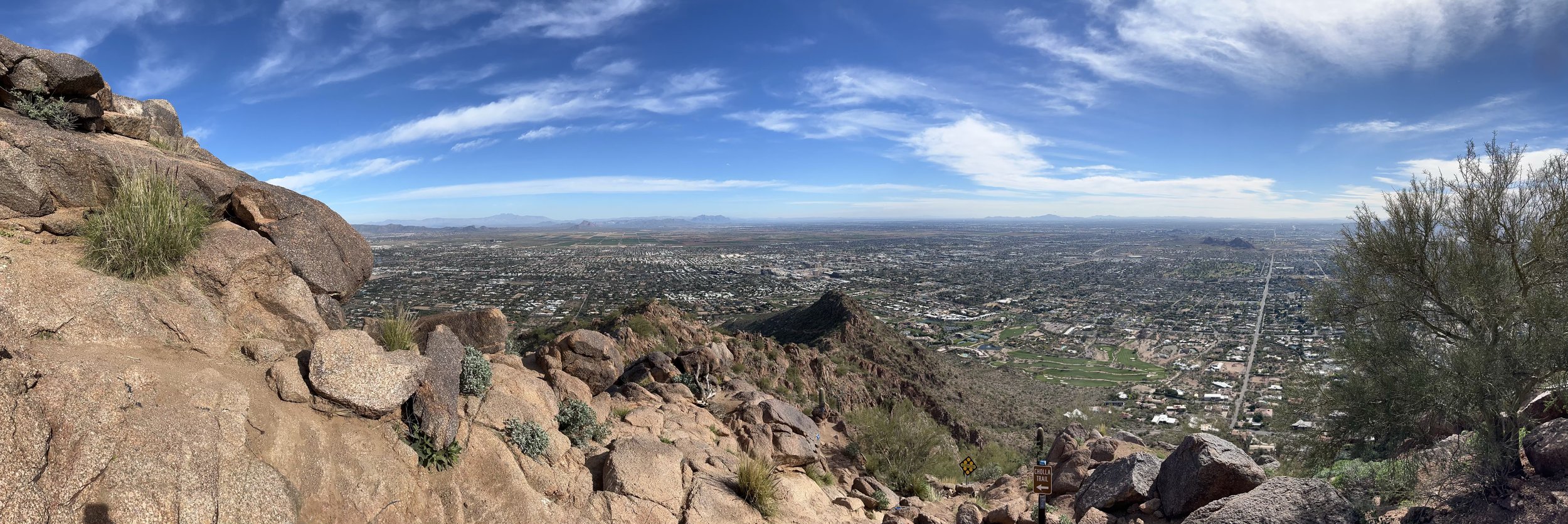
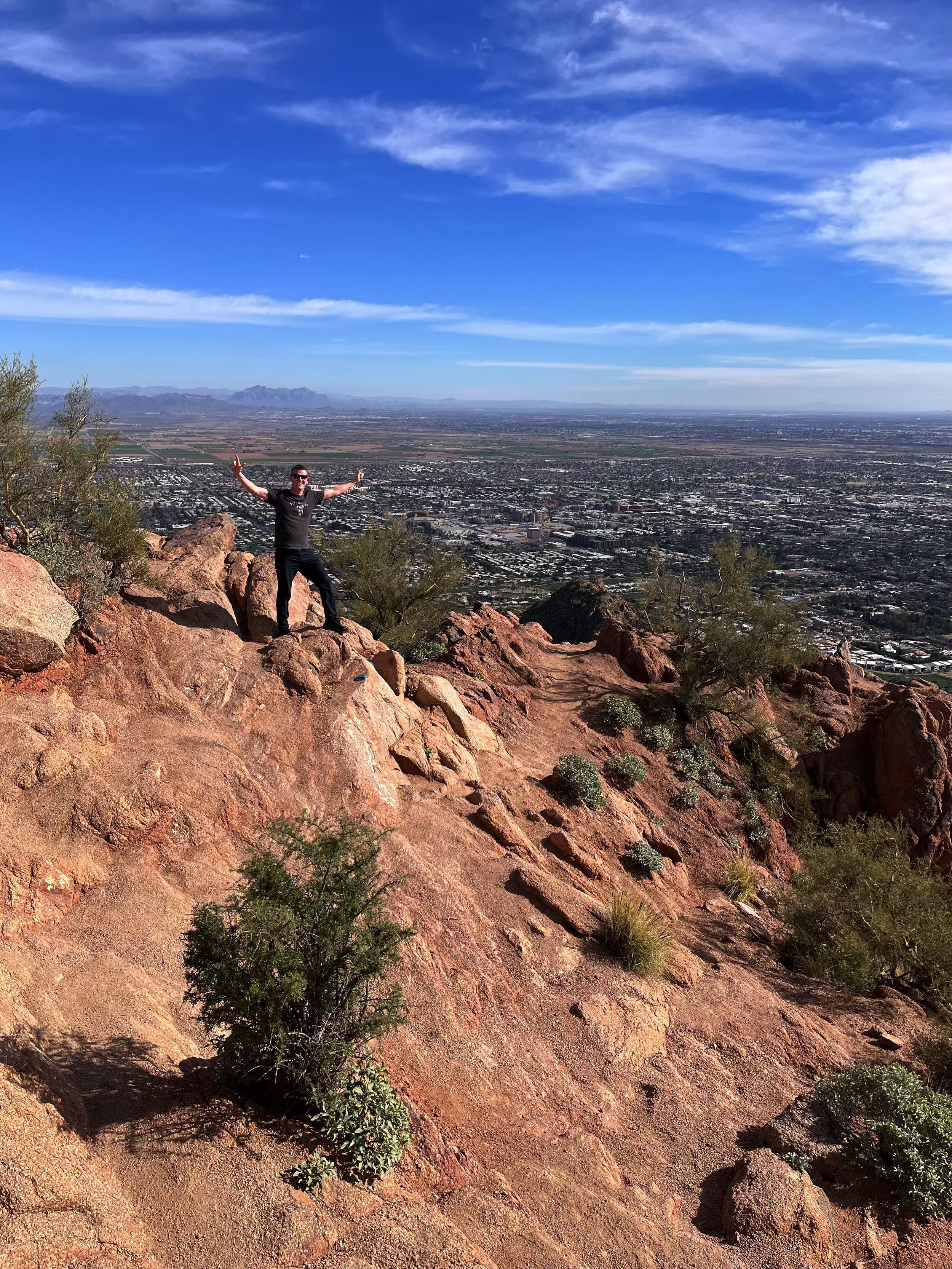
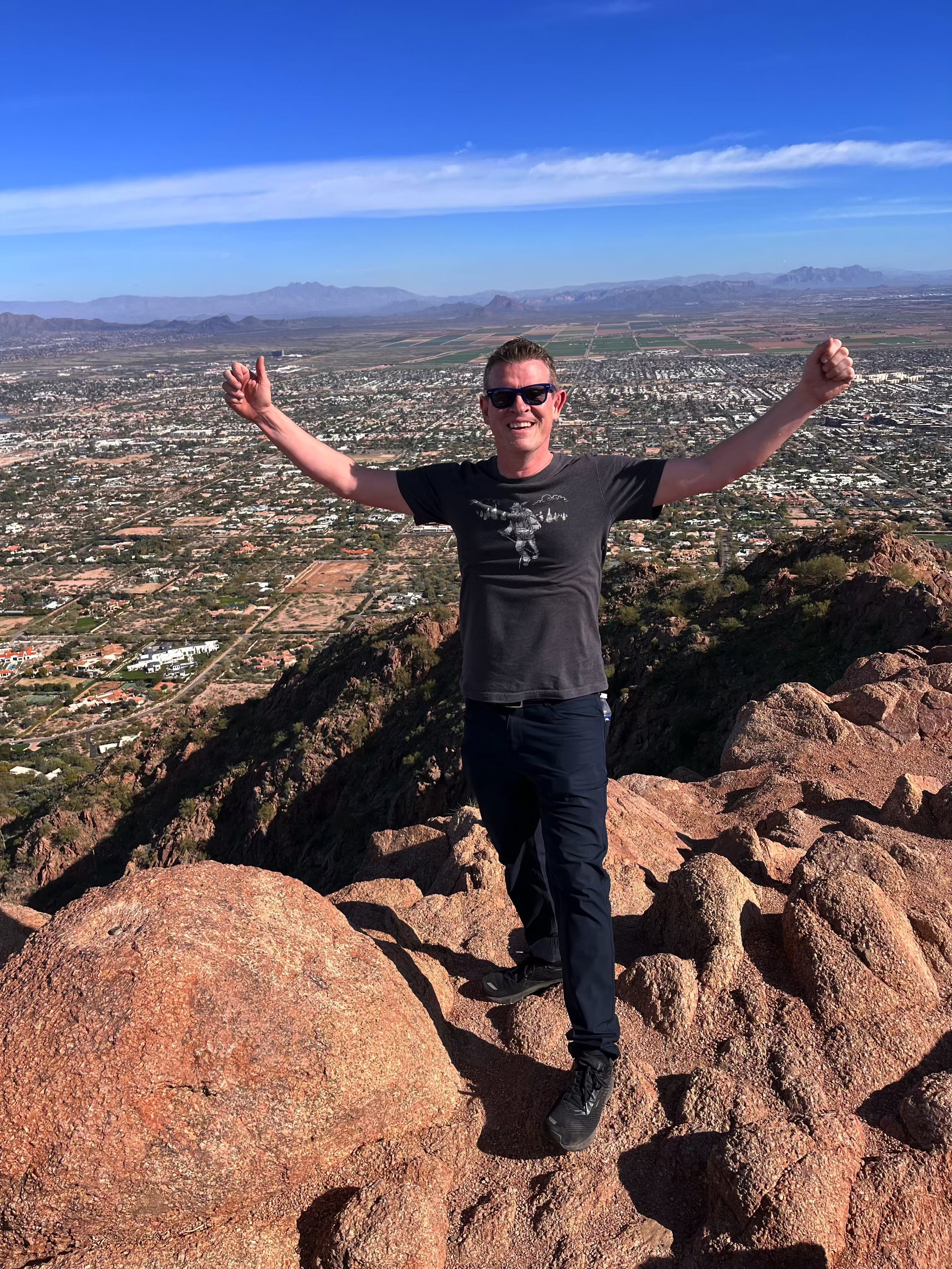
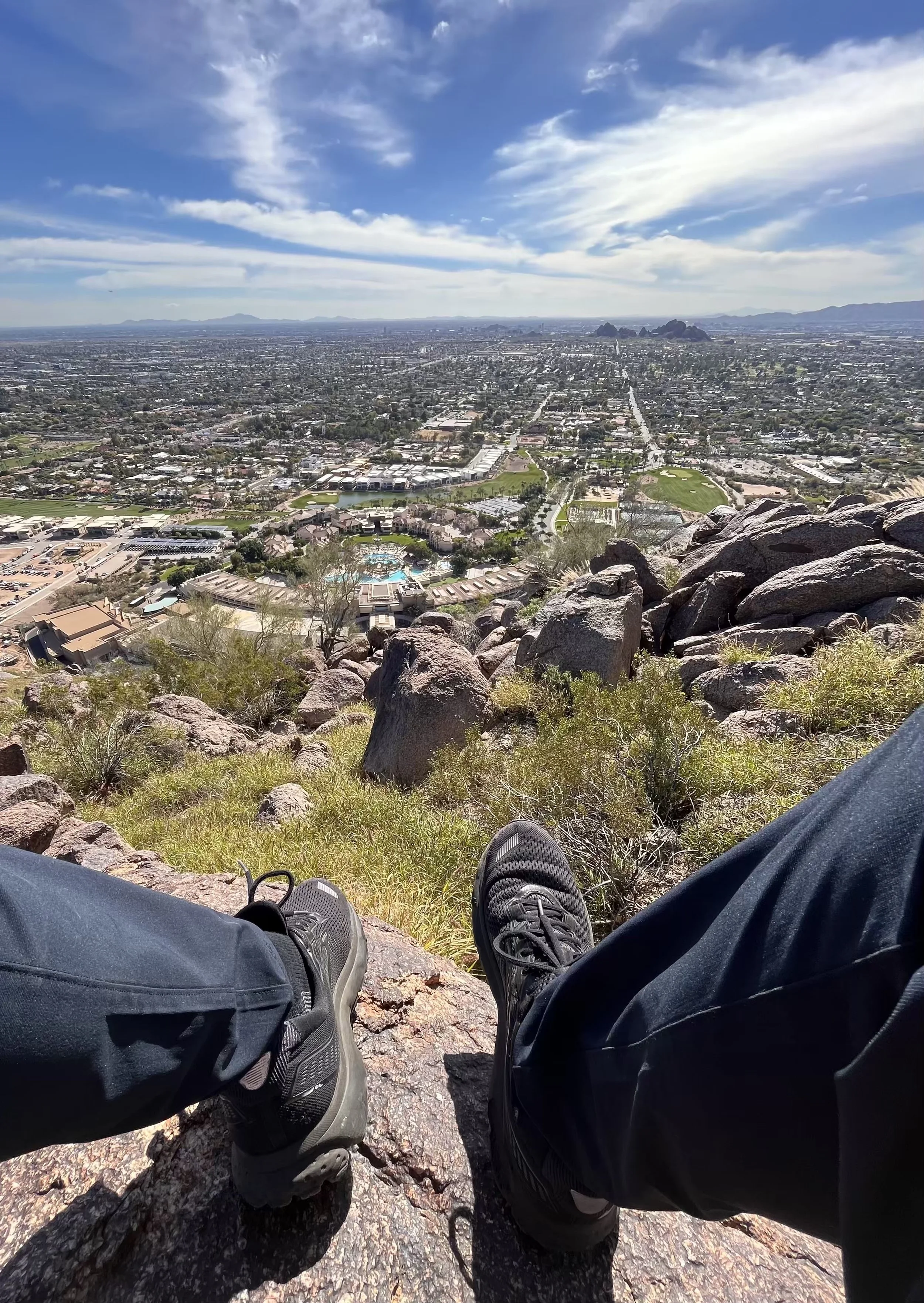
I managed to squeeze in two hikes while visiting Phoenix. I needed a little adventure and fresh air to clear my head and ruminate about my business. 

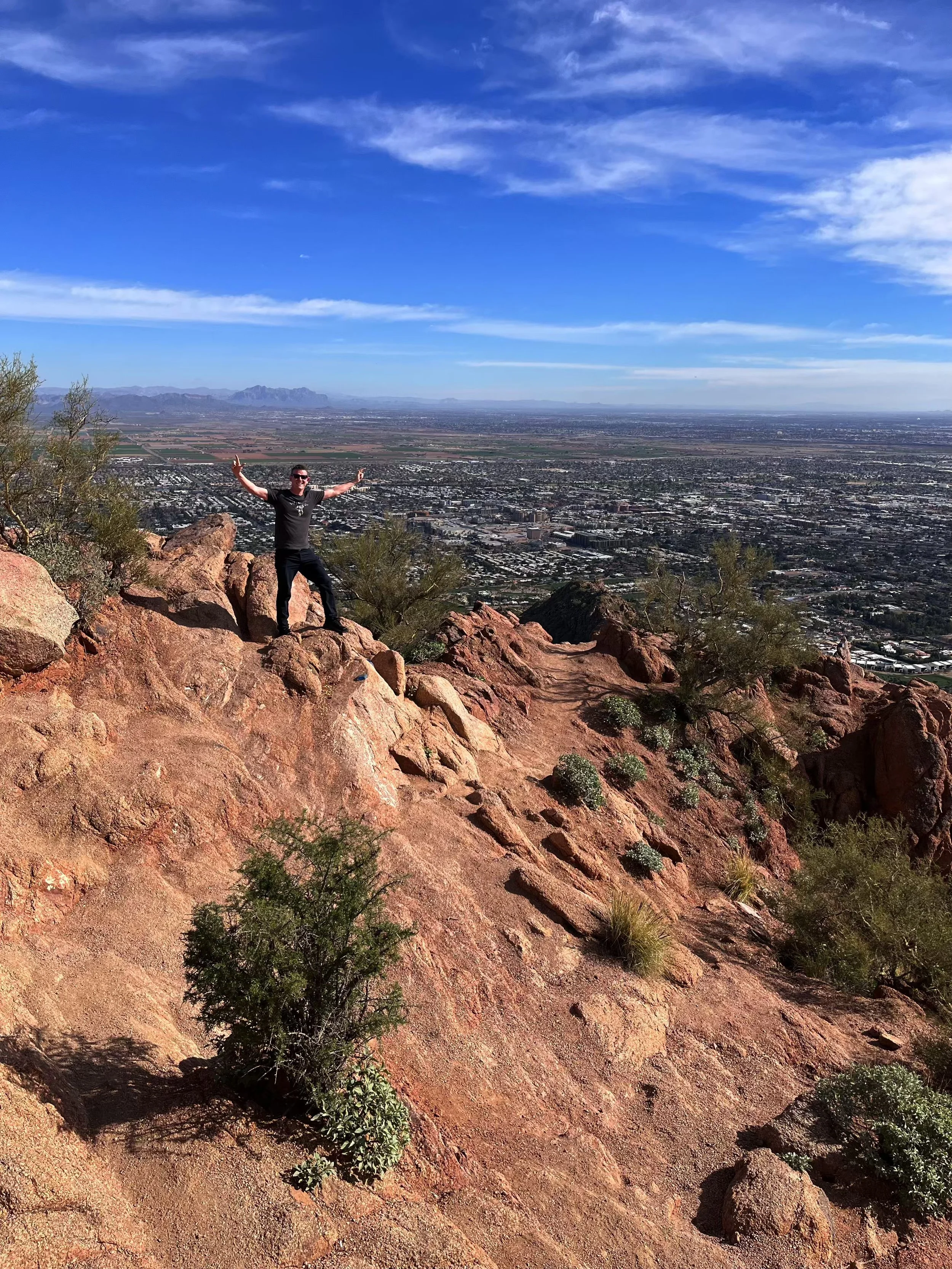
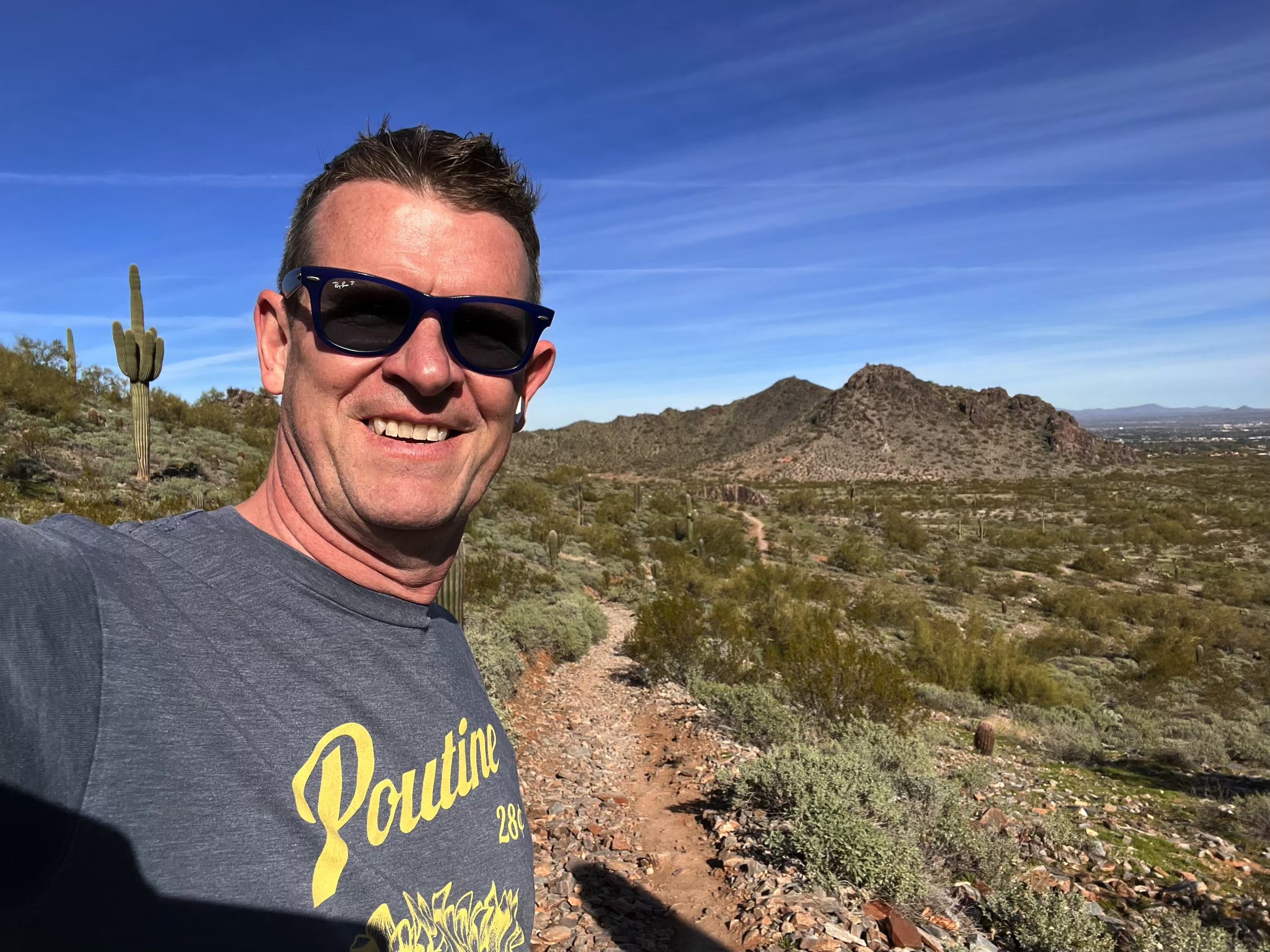
My hikes took me to Camelback Mountain via the Cholla Trail, a three-mile hike up 1,279 feet, with me climbing steep rock walls. And Phoenix Mountain Nature Trail 304, a less challenging two-mile hike into vast valleys. 

🌵Just do it. Nike sure nailed it with this, didn’t they? I had options to shop, eat, or stay in the lonely hotel room and stare at a screen. No, I fired up the All Trails app and chose the hikes based on their popularity. The first was labeled Hard, and the second was Moderate. 

🌵 Don’t be cocky or complacent. It’s always easier and faster getting down from the mountain than up. I moved a little too quickly, passing through the same loose rocks and cliff edges. I reminded myself that I could just as easily break or twist my ankle by not paying enough attention or being careful. Be careful going up and down.

🌵 The goal is closer than you think. It is. I almost quit the Cholla Trail when I noticed how much further I still had to climb and how steep and distant it seemed. The analogy of my work leading me to something bigger and better didn't escape me. I'm getting closer.

🌵 Be supportive. When I decided not to quit and keep pushing upward, a man passed me who said it was not much further. He added, “You can do it, man!” I reciprocated on the down part of my hike as I passed tired-looking people facing the same decision to quit.

🌵 Know your limits. As I got closer to the lowest lookouts, I came across a couple. The man held a baby to his chest, and the woman held a small child's hand. I was thankful they knew better than to attempt that climb with children in tow. I recalled seeing an idiotic man standing on a slippery rock at a waterfall. He held a child on his shoulders, wearing the cheapest plastic flip-flops. That image has never escaped me. Stupid, stupid, stupid. 

🌵 Prepare yourself. I was nearing the end of my return along the Piestewa Trail when I met James. I loved chatting with this older retired Silicon Valley engineer. I assured him the trail wasn’t too bad to go further, but he noted he had failed to bring any water and didn’t want to risk it. He was wise not to proceed. I also bought some sunblock and lathered up before each hike and was sure my phone had power - just in case. 

🌵 Pause and reflect. Along both hikes, I found a comfortable rock (as comfortable as rocks get) to sit on and reflect. Just breathing in the air and following my breath left me so relaxed and happy as the sun warmed me, and the shadow from the massive cacti kept me shaded. 

🌵 Don’t forget your business cards. On the first hike, I met a wonderful British couple from Soho in London. Michelle and Joe who was kind enough to offer me his business card and urged me to reach out when we visit London. I had my cards with me and gave James one on the second day should he find his way to Nashville.  

🌄 Not only did I get some needed exercise walking the mountain trails and roads around Scottsdale, about ten miles over a couple of days, but these lessons served as invaluable reminders to live a good life and hit those trails no matter where my travels take me. 

 Where will the trails take you?

Slow down and change your perspective.

My biggest takeaway from 2022 was to slow down and focus on perspective. What I learned directly resulted from a steady practice of mindfulness and meditation. The revelation came as I strolled along the lower trail of a State Park.

Radnor Lake is an over 1,300-acre nature preserve on the edge of Nashville. It has always been a favorite since moving to Music City in 2007. I’ve strolled along the tranquil lake paths and up to the more challenging cliffs many times with friends, family, and on my own. It was on my own when the thought of putting things in perspective hit home.

I suddenly felt melancholy and sadness as I noticed young children frolicking around me. It occurred to me that our kids are now teenagers, and the days of entertaining our young ones through the forest were gone. I was feeling lonely.

A lack of connection causes loneliness and is synonymous with perceived social isolation, not objective social isolation. Even living among people you love, you can still feel lonely. My challenges with anxiety weren’t helping me at that moment.

I noticed how happy the parents looked as they laughed at their kids being silly, bouncing through the leaves, and climbing the trees. I asked myself why I was feeling sad. The answer made me realize that my chosen emotion needed to be corrected. It wasn’t sadness that I should be feeling but happiness, but why happiness?

  • Happy that these random parents and their children were having fun around me.

  • Happy that I took our kids through these same trails many times when they were little.

  • Happy that our kids now have memories of their own and enjoy such hikes in their later teenage years.

  • Happy that I did this with our kids. I chose to take them on these walks through the woods.

This occasion of walking alone in the woods triggered my reflection, which led to the revelation. I realized that true sadness would be warranted if I had never taken them on the trails. If I had never spent time playing with them through those woods, that regret and sadness would make sense to me.

Slowing down and going for the hike helped me clear my head. The power of perspective made me realize it was a time to celebrate. I remember smiling and feeling great joy as I continued my hike along Radnor Lake.

Tips for trying standup comedy for the first time

I performed stand-up comedy for the first time last night. I didn’t bomb, phew!  

I’ve been a comedy fan for my entire life. I grew up listening to all of the greats on albums and watching them on TV. I studied improv at Second City in Toronto. I’ve performed improv in Canada, US, England, Scotland, and Ireland. But standup comedy is a different medium than improv.

In improv, actors rely on one another to support and build a scene together (or to save them from one with a stage swipe) using the audience's suggestions AKA gives. Standup is solo, though. You’re on your own. 

As a keynote speaker, I’m pretty comfortable on stages in front of audiences. I’ve delivered many presentations to thousands of people over the years. Audiences are more forgiving in these arenas because they are there to learn. 

A presentation can’t be crammed with countless facts alone; that would be a train wreck. But a comedian is the opposite when you replace facts with jokes because their success metric is the number of laughs they receive in a set.  

Stories are the medium used to deliver facts, gives, and jokes. 

I’ve performed at several storytelling events over the years. This experience is vital for professional speakers, improvisers, and comedians to consider. Stories are the medium used to deliver facts, gives, and jokes. 

When I think of my favorite comedians, it’s all about the story. Developing that narrative and fitting the jokes within makes excellent comedy.

Tips for first-time comics (even at 50-years-old)

Here are some tips if you’re planning to perform standup for the first time. I'm no expert, of course, but here are some things to consider. 

Build a network. I took stand-up comedy classes at Third Coast in Nashville. I wanted to learn about standup performance, but my second goal was to meet other newbies. This support group will give you honest feedback and hold you accountable. I believe this is crucial. Thanks to Caitlin Price for joining me!

Arrive early and plan to stay late. I arrived just as the doors opened at 7:30 to be sure to add my name to the list. I was the tenth name, and the sets were four minutes. In theory, I should have been on stage at 8:10, but I didn't get selected until - 10:00. The host was choosing people he knew first, but I understand why this is if the host is considering the audience. He needs to be sure the audience is having a good time and won't leave.

Prepare, prepare, prepare. I wrote my script on paper. Then I transcribed it on my computer. I printed that script to rehearse and added the main bullets on a notecard (large enough to refer to on stage without my readers. I’m fifty now, and I need readers - you will too.) I then paced across my living room floor back and forth with a timer reciting the performance. Over and over and over. My goal is not to bring the card on stage with me. It’s best to have more than enough content because, on stage, your nerves make you go faster than planned.

Study the art. I watch stand-up specials on Netflix and YouTube all of the time. I listen to brilliant podcasts like Good One, where the host Jessie Fox dissects hilarious comedy with the actual comedian. I also recommend storytelling podcasts like The Moth and This American Life. See live comedy! Note what you like and dislike from other comedians when you are in the audience. Be there to support these brave people!

Respect the house and the host. When the host flashes a light or gives you a wave, it’s time to wrap it up. As a speaker, I’m anal about time because I want to respect the next speaker, the audience, and the meeting planners. You can throw the whole schedule off if you go over your time speaking at a conference. You also want to respect the club for providing a space to perform. Order drinks and generously tip your server. 

Record your set. As cringe-worthy as it is, it’s essential to review your performance. Count the laughs (I got nineteen in four minutes for my first time, I included chuckles.) Note where you can improve—test new bits. You can buy a little tripod for your phone or ask your friend to record it for you. The recordings will reveal how much you’ve improved over time.  

Keep smiling. It’s easy to feel deflated when you’re picked last (or third from last.) It felt like my attempts to play sports in grade school. Since it was an open mic night, many talented comedians were testing new material, while others were amateurs attempting stand-up for the first time (like me). Regardless, smile and stay positive, and do your best up there. 

If at first, you don't succeed, try try, try again. This was on a fridge magnet at my mum's house when I was a kid. It was solid advice. I love this quote by Norm MacDonald about bombing, "Comedy is surprises, so if you're intending to make somebody laugh and they don't laugh, that's funny."

Want to hear more about my adventures with standup? Follow the journey here.

If you're looking for more advice on performance, writing, and comedy, check out this blog post

What’s your experience with stand-up comedy? Have you performed before? Would you like to try? Leave a comment, I’d love to hear from you.

Immigrants, sex, and donuts
immigrants sex donuts.JPG

Immigrants come to this country in droves. They start businesses and use a tax loophole, so they don’t have to pay taxes. They then invite their family members and friends here, they too start similar businesses, and they don’t pay taxes either!

This is something two American friends told me a number of months ago before dinner. They explained that these loopholes are how immigrants come from countries like India and Korea and now run most mid-range hotels and convenience stores, respectively.

Naturally, I was dumbfounded. I Googled their tax claim and discovered they were wrong. I politely added that I wish it was true since I’m an immigrant. I joked that I wanted to cash in on this*. They were both surprised but accepted my fact-checked revelation.

I explained that it made sense that an immigrant who comes to America and starts a successful business would invite their extended family. Naturally, they would support and mentor them to create similar businesses. This is what Irish laborers and Italian restauranteurs did in the early days of the US. Go back even further and it was the Spaniards and French who built great wealth from this Native American land.

I don’t expect the gentlemen were racist, they were simply ill-informed by rumors and misinformation. It’s easier to make the case when the people you refer to don’t look like you. Besides, I added, isn’t discovering loopholes to pay as little tax as possible the American way? Even that former president applauded such efforts, but I digress.

Sex & Donuts

Recently, I watched two documentaries on Hulu. I didn’t expect they would both leave me thinking a lot about immigrants... and sex and donuts.

The first film was Ask Dr. Ruth. I watched it because I was just speaking with my kids the other day about her. I told them how we (people growing up in the ’80s) learned all about sex from Dr. Ruth Westheimer (and Sue). I was curious about her story and decided to give the movie a try. I had no idea that Dr. Ruth had been a refugee who lost her parents during the holocaust. She ended up immigrating to the US in 1956.

The second film was The Donut King. The story of Ted Ngoy, also known as the “Donut King” who came to the United States as a penniless refugee from Cambodia in 1975.

Both Dr. Ruth and Ted Ngoy had horrific experiences that led in part to their relentless work ethic and passion for supporting others. Dr. Ruth literally taught thousands of Americans about sex, while Ngoy taught hundreds of Cambodian refugees how to open and run their own donut shops across the country. Both are heroes.

I had no idea that an estimated 80% of donut shops in the Los Angeles area are owned by Cambodian Americans. In Houston, Texas, the percentage is an even larger 90%.

This morning, on the way to school, I took my kids to our local donut shop and mentioned the movie to the cashier. She laughed and confirmed that she too was Cambodian!

I realize immigration is a complex topic that’s far beyond my scope. But I encourage you to watch both of these excellent films and use the web to fact-check when you hear outlandish statements.

And in case you’re wondering, here are the top 25 US companies run by immigrants.

  1. Tesla

  2. Google

  3. eBay

  4. PayPal

  5. Nordstrom

  6. BNY Mellon

  7. Kohl’s

  8. Cognizant

  9. LinkedIn

  10. Big Lots

  11. DuPont

  12. Pfizer

  13. Yahoo

  14. Soros Fund Management

  15. Kraft Heinz

  16. Goldman Sachs

  17. General Electric

  18. Comcast

  19. Emerson

  20. Capital One

  21. Procter & Gamble

  22. WellCare Health Plans

  23. Honeywell International

  24. Colgate

  25. Thermo Fisher Scientific

*This immigrant always pays his taxes in full.

Walkable Perspectives
Photo by Brooke Cagle on Unsplash.

Photo by Brooke Cagle on Unsplash.

(Originally written in June 2020)

Nashville’s unofficial bird is the crane. From where I’m sitting as I write this, I count eight cranes looming over Music City.

According to the Nashville Business Journal’s “Crane Watch”, as of May 2020, there are 34 tower cranes in the Nashville skies — a number that's held relatively steady, with one crane seeming to appear each time another is dismantled. The tally is nearly as many as Seattle, and more than Chicago, Denver, Portland, and Washington, D.C., according to the firm Rider Levett Bucknall.

We live in the suburbs. I usually cringe when I see the massive, metallic machines looming over the sky. I bitch to myself about how I don’t even recognize sections of the city anymore. I complain about the lack of affordable housing and how musicians can’t even live here anymore.

Since temporarily relocating into the upscale, Gulch neighborhood, I’ve started to rethink my negative attitude. Cranes are a sign of growth. New buildings certainly beat boarded-up ones due to closures, which is the case in many cities and towns across this country (even pre-pandemic).

I came to this realization today as we walked Peggy. We walked north along 11th all the way to Jefferson. We discovered a section of the Nashville Greenway we didn’t know existed.

It occurred to me, as we stood on the NE corner of Broadway and 12th, that this used to be a super sketchy corner. When we first moved to Nashville in 2007, I noticed the only people who walked around were occasional tourists and homeless people. I longed to live in a walkable city.

Walking Cities

One of my favorite parts of traveling is exploring cities on foot. I always make a point to arrive early or depart a little later, so I can have time to walk around. This has resulted in me discovering all sorts of cool places creating my own mental Altas Obscura. Some discoveries that come to mind from such adventures are the doors in Scottsdale, a punk rock shop in New Hope, and a wicked record shop in Tucson.

It is because of all of this construction in Nashville that new walkable areas of downtown areas are appearing. I noticed many people out strolling to work, walking dogs, and jogging. I marveled at how we were able to safely move through the area with ease along the sidewalks and walking paths. I wished the traffic lights would change without a need for pedestrians to press the button, but this was overshadowed by the progress.

Nashville still has a ways to go to become a fully walkable city. It scores 28 out of 100 from WalkScore.com. I looked up my hometown of Toronto and it has a score of 61. Not too shabby.

What’s your city’s walking score?

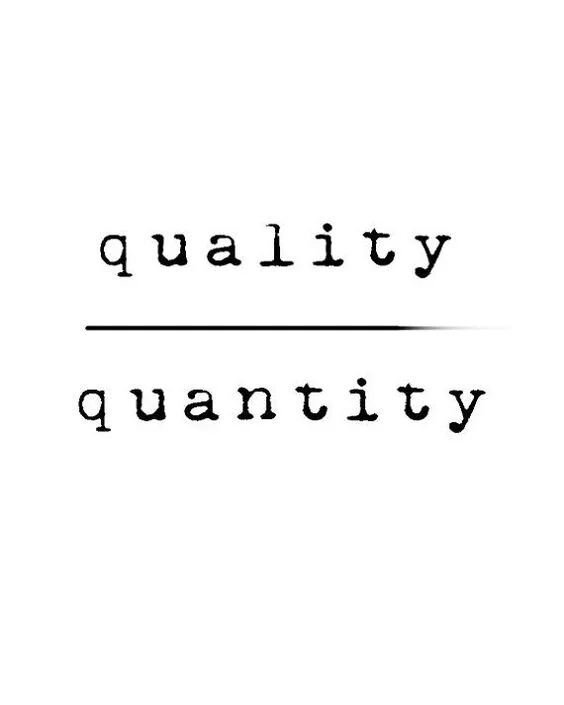
Quality Over Quantity
quality over quantity.jpg

A general rule of life should be to always aim for quality over quantity. The only exception I have thought of is money. I’d rather have more money, I don’t really care about the condition of the bills. With more money I can support the causes I care most about and eliminate the stress that stops me from creating the content I most want to share with you.

My quality over quantity rule is especially nice as it applies to relationships. I’m very much a people person. Over my many years of indulgence and excitement over the rise of social networks, I mistook these brief interactions with people as quality encounters. They used to be, but today algorithms decide whom you will see in your timeline instead of you.

Let your guiding rule be not how much, but how good. A thing you do not want is expensive at any price. Avoid surplus. Choose quality over quantity.
— Mayer A. Rothschild.

During my digital detox from social media last summer, I made it a point to reconnect with old friends via video conferencing, telephone, or a few in-person* beverages. I didn’t realize how much I missed this type of interaction.

I have been reviewing old photographs from the many conferences I attended over the years. I have then scheduled and conducted catch up video chats with some of those folks. The meetings have been personally rewarding to me. These quality chats are much more fulfilling than a like, comment, text, or private message.

The most precious gift you can give someone is the gift of your time and attention.
— Nicky Gumbel.

Spending 30-60+ minutes chatting with people I enjoyed meeting way back when has been one of the best uses of my time. Why not communicate again with the people you have most enjoyed interacting with in the past?

They say time and attention are our most valuable resources. Investing this time and attention in reconnecting with people I admire has made me far richer.

Quality relationships make you richer.


* Making a point to be six-feet apart, wearing a mask before and after, and with clean hands.

Be Nice to People. Rivers -> Radio -> Podcast

“I got through! I got through!"

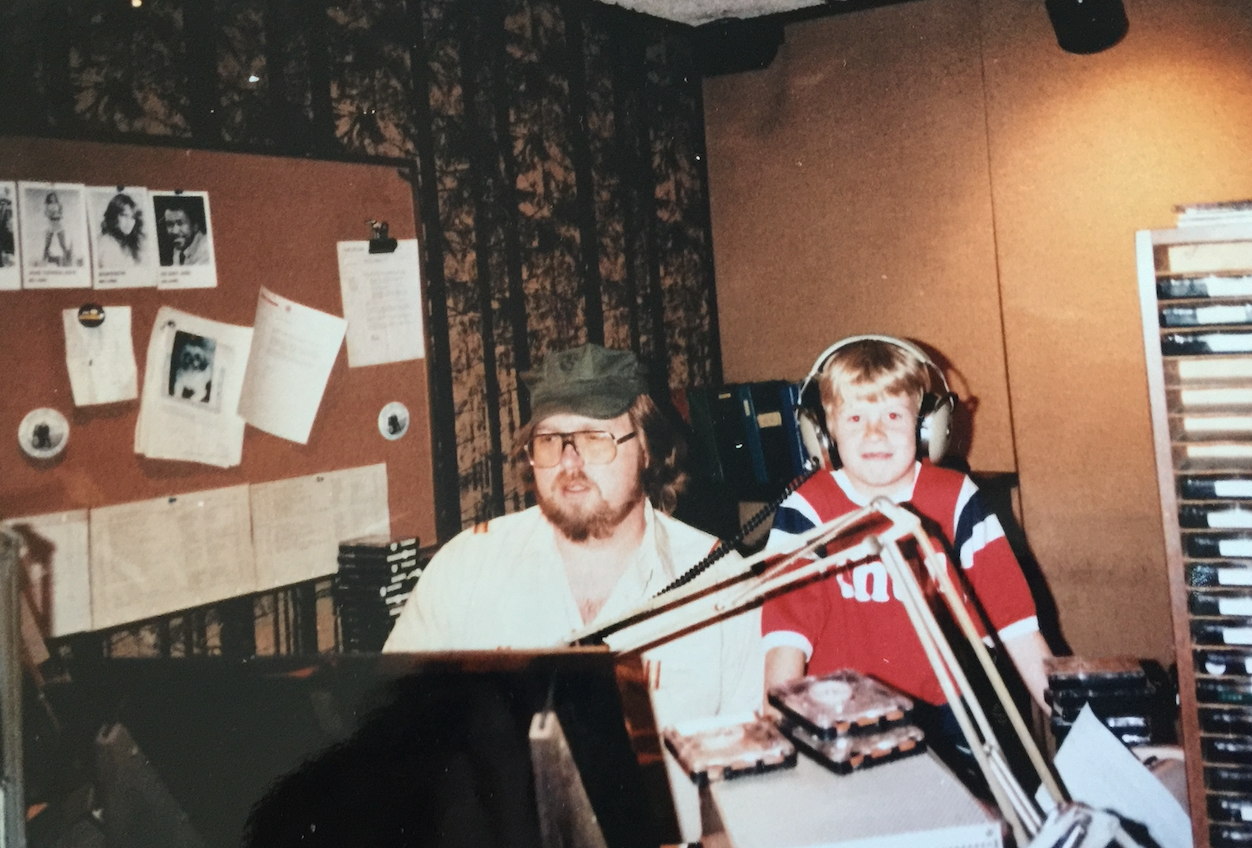
Few things were more exciting in the 1980s than calling your favourite radio station and getting through. I wish I could remember why I had called 1050 CHUM in Toronto, but there I was on hold about to speak live on the air.

The host of the morning show was radio broadcasting legend, Tom Rivers. Rivers was like Toronto’s own Johnny Fever from WKRP.

CHUM’s Creative Director, Larry MacInnis described Tom, “At heart, he was a mischievous twelve-year-old boy in the body of a six-foot-ten, four hundred-pound man-child – a heavyweight talent in every sense of the word.”

I suppose we connected well because I was around twelve-years-old at the time.

After saying something on air, Tom graciously invited me down to the station for a tour. I am willing to bet that 99% of Toronto kids were never given the same opportunity.

I begged my mum, who quickly gave in and scheduled our meeting. Together we travelled down to the popular Top-40 station in her denim blue, 1978 AMC Gremlin. The car even had a 1050 CHUM sticker affixed to the rear window like most cars in Toronto back then.

Tom Rivers and Me and 1050 CHUM radio in Toronto

I remember being mesmerized as I watched Tom in action behind the microphone and cart machines. His kindness and talent for broadcasting must have left an impression on me. In 1995, I graduated from Seneca College having studied radio and television broadcasting. Naturally, I majored in radio.

My love for radio led me to an internship on an internationally syndicated blues radio show called Blues North, hosted by the wonderful Big John Small. My career in radio teetered off after several attempts at getting a job at radio stations in Toronto. It was simply too competitive a market, and I didn’t have the professional drive or networking knowledge in me quite yet.

From Radio to Podcasting

My passion for broadcasting led me to begin podcasting in 2005. We nearly had the first parenting podcast, Two Boobs and a Baby. We were the second parenting podcast after Paige and Gretchen’s Mommycast. I have had several podcasts since then, with NBN Radio ADHD Wise Squirrels being my most recent podcasting endeavor. (updated 12/14/23)

I am thankful for how nice a guy Tom Rivers was. I am a firm believer that the kindness we share today can inspire others tomorrow. Just ask my daughter, who now proudly bears those call letters of yesteryear.

1050+Chum+T-Shirt

You can do this too.

From mentoring to giving a kid a chance, consider how your kindness can help inspire future generations. Blues artist Albert Collins was another legend who did this for me; that story led to me interning for a national blues radio show! Going above and beyond in the smallest of ways may seem simple, but these gestures are like waves that leave ripples in the water for decades.

What I Did on My Summer Social Media Vacation

I decided to take a break from social media. For the months of June and July, I refrained from posting anything to the social networks I have belonged to for over a decade. This was my first time taking time off for a digital detox from Facebook, Twitter, Instagram, and LinkedIn.

The purpose of my break was partly to unplug from the noise. Please note that our exchanges are never considered noise if you are connected with me on a social network. The other part was to clear my head of my dread and anxiety.

The noise is from the strangers in my feeds pontificating about politics and arguing over whether masks are useful during a pandemic (stop being stupid), the bots configured to create rage, the media companies seeking clicks and views, the stalker-like advertisements that follow me from retargeting even after I’ve made the purchases. You can stop wasting your money Rayban and Rugstudio, I already bought from you.

Let’s not forget how social networks use algorithms to decide who and what we should see in our feeds. I preferred social media when it was social, and we didn’t need this.

What I Did on My Summer Digital Detox

The following are things I noticed being off social media.

More Thinking. In the past, I haven’t paused long enough to consider why I wanted to share something. I’ve thought much more about this since taking a break. I share on social because I like to entertain, inform, and promote my content and content from people I admire.

Saved Time. When I snap a photo, I usually do so with the intention of sharing it on Instagram. Instead of posting it right away, I take the time to use filters and photo editing apps to improve the quality of the shots. I then consider the caption and corresponding hashtags. I would guess it takes me about 15 minutes to post one photo to Instagram. I’ve posted 3,642 images to Instagram since I created my account in 2010. That works out to 37 days, 22 hours 30 minutes.

More Reading. I ended up recouping the time I would have spent on social media. This left me with more free time to read books again. When taking Peggy for a walk, I often flip endlessly through Facebook, Instagram, or Twitter. I replaced this urge by returning to my books within the Kindle app.

No News is Good News. When I wasn’t reading my Kindle app, I (too) often switched to Google News or Apple News and would fall down the rabbit hole. Obviously, staying informed is important. However, too much news is never a good idea. I found the experience better by pondering why I clicked each headline.

Reach Out and Touch Someone. Like the old Bell telephone ads of yesteryear, I realized there was much more value in emailing, texting, video conferencing, or phoning a friend than tagging them in a social media post. One friend released his new book, so I called him to tell him how much I enjoyed it. Another friend exchanged a series of text messages with me about his divorce. One friend and I had so much fun chatting over Zoom for the first time in many years that we scheduled a second call and continued the conversation.

Shutting Down the Phone. The damned phone is a big part of the problem. I appreciate a smartphone for the glorious piece of technology that it is. However, I’m not naive enough to ignore the addictive features built within. I realized I needed to power my phone off to keep from picking it up. I deleted the social apps, switched it to grayscale, and turned off the dopamine-releasing notifications.


Positives of Social Media

I would be remiss not to talk a little about the positives of using social media. While I did delete the social media apps from my phone, I still logged in once a day to check my private messages. My break was not a break from being social; it was a break from social media.

I made the Twitter exception of checking my Nashville Weather list from time to time as dark clouds loomed, especially when I was on the lake.

I received a warm welcome back when I announced that I had returned from my break on August 1. Thank you to those who said hello.

If you missed the news that I had taken a break, I expect the algorithms failed to inform you. It makes sense; why would the platforms want to give you an idea to take your break?

How about you?

Have you ever taken a break from social media? How did it work for you?

In Defense of Nice
In Defense of Nice.png

A while back, I sent a survey to my email newsletter subscribers. The Nice Makers were kind enough to provide me with feedback to help me shape future editions. One comment I received asked me to share my thoughts on “nice”.

As you know, the newsletter is The Nice Maker. I am the chief connector at Networking For Nice People, this blog is called The ROI of Nice. I’m obsessed with using nice as a way to improve how we communicate with one another.

Pleasant; agreeable; friendly

Look up the definition of nice and you will find words like pleasant; agreeable; friendly.

I write and think a lot about empathy and kindness. I believe this is at the core of effective communication. I consider myself a humanist. Humans are far from perfect, but we learn and pivot from the lessons in life that help us grow wiser together.

I believe in standing up for our rights. I believe in truth and justice (and justice reform). I believe that rather than striving to be angelic followers we should aim to be nice. Nice isn’t perfect. We aren’t always kind and we aren’t always empathetic, but I believe we become nicer when we strive to practice kindness and empathy.

Pleasant

We can be pleasant by simply smiling more. Smiling really is contagious. Sensorimotor stimulation in our brains causes us to mimic what we see without realizing it. When we mimic someone else’s facial expression, we trigger that same emotional state in ourselves, which then allows us to formulate an appropriate social response like returning a smile we receive.

Believe it or not, people can read your smiles even when they are hidden beneath masks. As a photographer, Laura Fuchs who shoots New Yorkers smiling behind their masks says, “I can see your smiles. It’s all in your eyes and cheekbones”.

Agreeable

Being agreeable is the essence of being nice. This is the practice of saying, “Nice, and…” when someone suggests something to you. This practice is always better than rejecting someone with a “Nice, but…”.

Try it next time someone suggests something to you. Spend a full day responding with “Nice, and…” in your reply. More details on this here.

Friendly

Approach the people in your life with an empathetic mind and a “nice, and” attitude. We express friendliness by doing so. My goal is to always make people feel comfortable whether they are in a workshop I’m leading, a meeting, or a casual encounter. The key to coming across this way is to actively listen to the people you meet.

Standing up is also nice

Using courage and facing fears are also traits of being nice - nice to yourself. Standing up for those who need it is nice. Being the person you needed when you were younger is nice. Nice isn’t complacent. Nice isn’t cowardness. Nice is respecting yourself and the good people in your life.

I’m pushing for a nicer world and this begins with me and you. Are you in?

Taking a Break
Screen Shot 2020-05-26 at 12.22.47 PM.png

My head has been scattered lately. We have had to temporarily move from our home into a tiny, two-bedroom space for four people and a dog. Finding a quiet corner to work from has been practically impossible.

This move was due to the recent storms that gave our home and property a beating. The tornadoes, just two months earlier, destroyed my kid’s school and several favorite family spots. 

And we’ve had this damned pandemic. My son’s school band trip to New Orleans was canceled. Our NYC Broadway adventure for our daughter was postponed. I can’t visit Toronto to see my ill father and self-quarantined mother. Plus a summer trip to Europe to visit my brother was also canceled. First world problems, I know. We have our health and I am truly thankful for this.

My business has also taken a beating since most of my work involves public speaking and delivering corporate workshops. I have managed to switch some of this to virtual and I’m thankful the feedback has been great. I am also working with a few new coaching clients. Still, things are not quite where I need them to be professionally.

Summer Break for Planning & Producing 

I have frequently been distracted by social media and stories in the media that are out of my control. Instead, I should be focused on producing the research, outreach, and content that you will find valuable. Quite frankly, I feel the added distractions have pushed me off course enough to take a break - a summer break.

And so for the months of June and July, I’m going to pause The Nice Maker. I’m going to spend my days planning and producing. For the first time since I started using social media, I’m going to take a long-needed break. 

I always love to hear from you. I’ll still be scheduling video meetings and telephone calls. You can reach me at dave@futureforth.com anytime. I’ll keep an eye out for DMs, PMs, and such, but email will be your best bet. It’s time to unplug.

I’m excited to regain my focus and refresh my head. I expect great things will come as a result, I’m looking forward to sharing them with you in August. 

Enjoy your June and July. Stay safe and be nice to one another. 

Cheers!

Dave Delaney
 

PS:

If you’re craving some of my content, why not pick a blog post you might have missed?

Loneliness is Normal

It’s such a strange phenomenon to be self-quarantined with my family. I have my two teenaged kiddos home with us all day. They are often in their rooms working on school work, reading, gaming, or FaceTiming with friends. They spend the majority of the day hidden in their rooms. My better half is the same, she is happiest with a book but also helps the kids with their homework and has her own school work to do. Me, I’m working but I crave interaction. 

I was irritable for a couple of days in a row recently. I equated it to some future work concerns and our teenagers’ habits. I had a revelation yesterday while listening to Brené Brown’s Unlocking Us podcast interview with the physician and former Surgeon General of the US, Dr. Vivek Murthy.

What was the revelation, Dave? You ask.

I’m lonely. 

You can have many people around you and still feel lonely.

Researchers and scientists say loneliness is a gap between the connections you need and the social connections you have. Loneliness is subjective, it’s different than objective terms like “isolation”. You can have many people around you and still feel lonely. 

According to the American Psychiatric Association, loneliness isn’t necessarily the same as being alone. It usually refers to the distress people feel when their social involvement and relationships are not what they want them to be, such as feeling left out or alone when they’d prefer to be involved or interacting with others.

According to Dr. Murthy, there is a deep stigma and shame that comes with loneliness. We feel that if we are lonely we are not likable or broken in some way. This stops us from admitting how we feel to ourselves. If it’s beyond our vision, we don’t discuss it. 

People describe loneliness as carrying an entire load by themselves, they feel like if they disappeared tomorrow nobody would care, or they feel like they are invisible. It doesn’t look like someone sitting by themself at a party. It can show up in different ways like fatigue, anger, social withdrawal, or irritability. 

3 Dimensions of Loneliness 

Dr. Murthy defines three dimensions of loneliness and explains that we need all three dimensions to feel socially connected. 

  1. Intimate and emotional. We want a partner.

  2. Relational and social. We crave friendships.

  3. Collective loneliness. We want to belong to a community or network of people who share our interests. 

Any lack of relationships in these dimensions can lead to loneliness. So you can have a wonderfully intimate relationship with your spouse yet still feel lonely if you are lacking a community or friendships.

This is where approaching people for genuine connection instead of validation is key. 

Loneliness can also come from not being your true self. You need to connect to yourself by understanding your worth and value. This gives you the power to be yourself. 

If we spend time trying to be someone we are not it doesn’t feel good. Human instincts guide us to deeper connections to people. You feel emotionally drained when you are craving someone’s acceptance. Think of a date or meeting when you are nervous. You’re exhausted by the end because you are focusing on trying to please them.

Focus on the connection you have to yourself first. Recognizing this is powerful because you can observe how you interact with others. 

Check-in with how you are feeling during interactions. Be mindful of this. 

Loneliness has profound consequences for our health. It’s much more than just a bad feeling. Dr. Juliana Holdlongstand has done extensive research into this and discovered that people with strong social relationships are 50% less likely to die prematurely than those with weak social relationships. She found the impact of lacking social connection on reducing lifespan is equal to the risk of smoking 15 cigarettes a day and is greater than the risk of obesity, excessive alcohol, and lack of exercise.

Dr. Holdlongstand studied multiple studies and found confirmation that this causes a higher risk of coronary heart disease, high blood pressure, stroke, dementia, depression, and anxiety. Loneliness can leave you with a lower quality of sleep, more immune system dysfunction, and more impulsive behavior and impaired judgment. 

Relationships are the foundation of dialogue. 

We, humans, are relational entities. We decide who we want to hang out with instinctively. If you spend five minutes openly talking to a neighbor, that gives you a shared experience and gives you insights into their values. What’s important is it’s an in-person (albeit 6-feet away) conversation.

These days everyone is connecting via web video chat services like Zoom, Skype, Hangouts, and via telephone and social media. Online dialogue is so challenging because there is no relational context. 

Visual cues like body language and facial expressions or tone of voice can also be missing from encounters on social media. This can easily lead to toxic exchanges online. 

The only way to address big issues is to talk with people. Today’s technology makes us think we know ‘the enemy’. We believe what we see and hear online and in the news. We end up feeling closer and more threatened to the people we are against. It’s crucial that we don’t feed the trolls. 

Stop watching the news frequently. 

You don’t really know the people you see online or in the news who you feel against. Step back and consider they are humans - be empathetic. There are parts of everybody that are lovable to others. Consider what the people you feel against are scared about. Everyone has something that makes them lovable and something that they are scared about. This is called mutual vulnerability.

There is a cognitive bias called motive attribution asymmetry. This tells us our beliefs are grounded in love and our opponents’ beliefs are grounded in hatred. The contempt that results in this bias is visceral and righteous. It feeds intolerance and the same emotional stew that makes loneliness so toxic. 

People don’t trust each other’s motives. This leads to motive attribution asymmetry. The only way to get past this is to build true, authentic relationships with each other. The only way to do this is to open up and be vulnerable. 

We get signals telling us who we need to be. The definition of success and worth is often led by our ability to acquire wealth, reputation, and power. The reality is the true definition of worth is about the ability to give and receive love. It requires courage to be vulnerable, the ability to recognize our values. Society tells us to chase the false gods of wealth, reputation, and power. 

Dr. Murthy explained that he is worried we are not setting our children up to believe in themselves and recognize their true source of power and self-worth. Instead, we are telling them their value is conditional on the acquisition of extrinsic things and circumstances. 

Human Nature.

Hunter-gatherers being separated from their tribes once led to loneliness. This meant our likelihood of survival went down because we were more likely to be killed by a predator or have a lack of food supply. Our threat level would shift up and we would focus inward because of our lack of safety. We need one another it is human nature.

When you try to interact with someone who has an elevated threat level, it makes it harder to connect with them. Loneliness chips away at our self-esteem. It makes us think we are not lovable or likable.

We need to make a conscious decision in our culture to shift what self-worth is defined by. Understand shame and empathy. Shame corrodes our capacity for empathy of others because it is so self-focused. When we do this we will continue to lead people to a place where they don’t feel they are enough, which is a recipe for loneliness. 

Loneliness reveals the power of human connection in our life.

Loneliness reveals the power of human connection in our life. The power of that connection can heal deep trauma. Authentic, open relationships lead to love. There is nothing more powerful than love. We need to strive to move us as a society to value connection and put people at the center of our lives and society. 

It’s normal to feel lonely. I felt much better when I shared this discovery with my family. It turns out we all feel lonely and it’s perfectly normal during this ‘new normal’ pandemic life we are living. 

I encourage you to give the full podcast interview a listen. I also recommend picking up Dr. Murthy’s book, Together: The Healing Power of Human Connection in a Sometimes Lonely World.

Photo by Jon Tyson on Unsplash.

How to Stay Sane During a Pandemic

I have a tip to help you keep your sanity as you are social distancing at home. This doesn’t involve creative ways to exercise while hunkered down. It doesn’t include a sourdough bread recipe or a Netflix recommendation. It involves some reflection.

I’ve been thinking about how much worse being stuck inside at home would be if I was living in the past.

This could have happened back in 2002 when we had a 725-square-foot condo in Toronto. It was nice but small for two people. We were newlyweds, but I expect Heather would have left me if we had been stuck together this long (I wouldn’t have blamed her). We had even considered staying there when we got pregnant, but it would have been terrible for three and even worse for a family of four. Imagine parents with two young children stuck in such small quarters during a pandemic?

Edinburgh window.png

We once shared an apartment with five flatmates in Edinburgh, Scotland. We had one telephone, one bathroom, one kitchen (and one bottle of Fairy) between all seven of us. This was before Netflix. We had to walk several blocks to the video store to rent movies. Renting movies wouldn’t have been possible being locked indoors with businesses shuttered. We had no internet, only internet cafes blocks away that would have also been closed.

It could have been far worse. We could be in Galway, Ireland sharing a tiny apartment with three unpredictably, irrational flatmates (no, not you Ben, Aaron, and Maura, a different place). One flatmate was temperamental, one was a psychotic gypsy, and the other was a criminal. We didn’t have a television in our room back then. We had a lock on the door to sleep (somewhat) peacefully. Quarantining in that place would have been hell.

If COVID-19 had arrived in 1988, I would have been living alone in a dark, musty, basement apartment. That “swanky” bachelor pad (err, dump) had one tiny, ground-level window facing some bushes and only one room. It didn’t even have an oven for baking precious sourdough bread, it came with a hotplate. COVID-88 would have sucked.

Try Reflecting

Reflecting on some of the places I have lived has made me more empathetic. I consider the different scenarios that other people are going through today. This perspective has left me much more content as I continue to hunker down with my amazing family.

We have our health. We have a roof over our heads. We have an oven and enough yeast to bake sourdough bread (we haven’t tried yet). We have a treadmill, Netflix, and even toilet paper. We are going to be okay.

I’m just going to resist boasting about it online.

Reflect on what you have now compared to the past. Consider how others must be dealing with living in such close quarters under these unpredictable, unfortunate days.

Stay safe, friends. Be kind. Wash your hands.

Photo by Devin Avery on Unsplash.

On Washing Your Hands

I’ve been washing my hands much more often and with greater intent lately. I hope the same applies to you.

The other day I discovered a fun tool to help reinforce the practice of washing your hands. A big shout out goes to William Gibson who created Wash Your Lyrics.

Before dinner, I asked my family to name their favorite songs. I plugged each song title into Wash Your Lyrics and printed a mini-poster to refer to as they scrubbed up. I’ve included The Tragically Hip’s “Bobcaygeon” here as an example.

Some Thoughts on Washing Your Hands

But seriously folks…

As I was cleaning my hands the other day something occurred to me. I pictured who I was washing my hands for. I imagined my kids and Heather. My friends, family, neighbors, our community, and perhaps even humanity. Oh, and myself too.

As the soapy suds dripped down the drain from my fingers, I began to take deep breaths. In deeply for a few seconds, out deeply for a few seconds. I looked in the mirror and pictured the people in my life and how much I love them.

Who are you washing your hands for?

A Two-Sided Ball and Emotional Intelligence

The Two Colored Ball Experiment

A Two-Sided Ball and Emotional Intelligence

The experiment consists of showing a two-color-sided ball to a two or three-year-old child. Let’s say one side is red and the other is green. You sit on the floor across from the child and rapidly spin the ball, so the child sees the different colors. After spinning the ball, you place it between each of you with only the red side facing the child and the green side facing you.

When you ask the child what color they see. They will correctly say “red”. When you ask what color am I seeing, they will also answer “red”.

The child can’t take the role of the other. They can’t see it through your eyes. They are seeing the world in a completely different way. As they get older (around six or seven-years-old) they will recognize both colors and answer correctly. They will understand that you are seeing the world from a different perspective.

Ego-centrism, Group-centrism, World-centrism

As you age you can see the world with different perspectives and ethical development.

Young children see the world in an ego-centric manner. Egocentrism is the inability to differentiate between self and others. They don’t assume or understand any perspective other than their own.

As we age, we see the world in a group-orientated way. These groups can come from our tribes, families, communities, cultures, political affiliations, and religions. Problems arise here because we choose sides and become pigheaded. Does this sound familiar these days?

Ultimately we should strive to gain a world-centric perspective. This is where we care for all living things regardless of who they are.

Improve your Emotional Intelligence

Emotional intelligence is the ability to perceive, evaluate, and respond to your own emotions and the emotions of others. One way to improve your emotional intelligence is to put yourself in the role of the other person.

Imagine you have your two-colored ball between you and who you are talking with. Always try to see the ball as the other person. This is what being nice is all about.

Be sure to listen to all three parts of Futurethinkers podcast interview with philosopher Ken Wilber, the creator of Integral Theory and one of the key figures in the area of consciousness studies of our time.