Posts in business & career
VIDEO: Geeks University: Networking Tips
Luria Petruci (AKA Cali Lewis) GeekBrief TV interview with me at Mac World in 2009. Photo by Griffin Technology.

Luria Petruci (AKA Cali Lewis) GeekBrief TV interview with me at Mac World in 2009. Photo by Griffin Technology.

I'm a big proponent of ethical, good-natured, non-douchey networking. I even wrote a book about networking, and my keynote presentation is all about the topic too. 

I had the great pleasure of catching up with an old friend yesterday, while we streamed live video on Facebook (video below). Luria Petruci is an early technology adopter and innovative talented video host. She once went by the name Cali Lewis and ran GeekBrief TV. I still remember when she interviewed me at Mac World in 2009. Her energy and honesty shined through her work as much then as it does now. We kept in touch via Twitter over the years and ran into each other from time to time in-person at CES.  

Networking isn't just about establishing relationships. It's about keeping in touch and looking for ways to help the other person. 

In our conversation, we spoke about the importance of networking for your career and business. I shared tips on how to grow and nurture your network online and offline. It's pretty clear how excited I was to catch up and chat with Luria after so long. I hope you enjoy our conversation and learn a thing or two about networking.

If you want to learn more about creating online video, you should definitely check out Luria's courses at Geeks University. She has been doing web video for as long as there has been web video, she's truly a pro. 

9 Tips to Work Remotely With Your Family
Working remotely from a teepee

I recently returned from a family adventure. We flew to Denver, rented a car, and embarked on our first DelaneysGo.com road trip. We had a wonderful time exploring the great states of Colorado, New Mexico, Arizona, and Utah. There was just one small catch, I still had to get work done along our journey.

When you run a small business, you can't simply unplug and stop working altogether. Yes, a family vacation should be all about spending time with your family, but you should never neglect your clients.

If you are like me, you have probably found yourself in the same boat (maybe even on a boat). The following are some tips to help you run your business while on your family vacation.

9 Tips to Work Remotely With Your Family

  1. Let your clients know that you will be on the road for a couple of weeks before departing, so they know to expect a delay hearing back from you.
  2. Set up your trusty, Out of Office email auto-reply with the details.
  3. Split the driving time with your spouse, so you can tend to your email and catch up on industry news and social media.
  4. If you need to get writing done, complete invoices and proposals, you can tether your laptop to your phone. Avoid videos, so your telecom doesn't penalize you with bandwidth overage fees.
  5. Since you will be sharing a hotel room with your children (like us), you will probably get to bed at a relatively early time each night. Be sure to wake up before the rest of your family and head to the lobby to work. Bonus points if you can walk to a local café with Wi-Fi. This gives you a little local flavor, plus you support a fellow small business.
  6. If you can't sleep because of the looming work you know you need to get to, sneak into the bathroom and set up your temporary office. Type quietly as you perch over the toilet (not so ergonomically designed). Stand-up comedian and Conan O'Brien staff writer, Brian Kiley, is known for writing material this way.
  7. If you are RVing or camping (we camped), check to see if the park has Wi-Fi. You will be surprised to learn that many do.
  8. Always be brainstorming ideas for new content along your travels. Use a notepad and sketch out your thoughts for blog posts, newsletters, and any other content you plan to produce.
  9. If your family is quietly reading, sleeping, or staring deeply into their devices as you travel, listen to an audiobook or podcast on your headphones. I usually choose non-fiction, business-related content, so I can discover new techniques to market my business and help my clients with theirs.

Be clear with your family that you still need to get some work done during your family vacation. Remind them that your business helps to pay for their trip. Without my amazing clients, we wouldn't have been able to go on our adventure.

I asked the DelaneysGo newsletter subscribers for their own remote working tips. Matthew Rogers suggested that we should be prepared with all fully charged devices to get work done. He uses his iPhone's personal hotspot to download client files. He also suggested using text edit to draft blog posts, since other software that depends on an internet connection can be spotty. Marc Apple recommended setting a certain time of day to check emails and to make phone calls. He urged readers to stick to that schedule to make the most of your time away.

Most importantly, understand that a family vacation should primarily be about your family. I am not suggesting you bury your head into your laptop or behind your mobile device during your whole holiday. Be open with your family, so they understand why you need to get work done.  Don't forget why you are on a family vacation in the first place. 

Have you traveled with your family and still got your work done? I'd love to hear how you did it. 

This article originally appeared in The Tennessean Newspaper.

Outsiders Beware. Your Brilliant Idea Could Be Terrible.
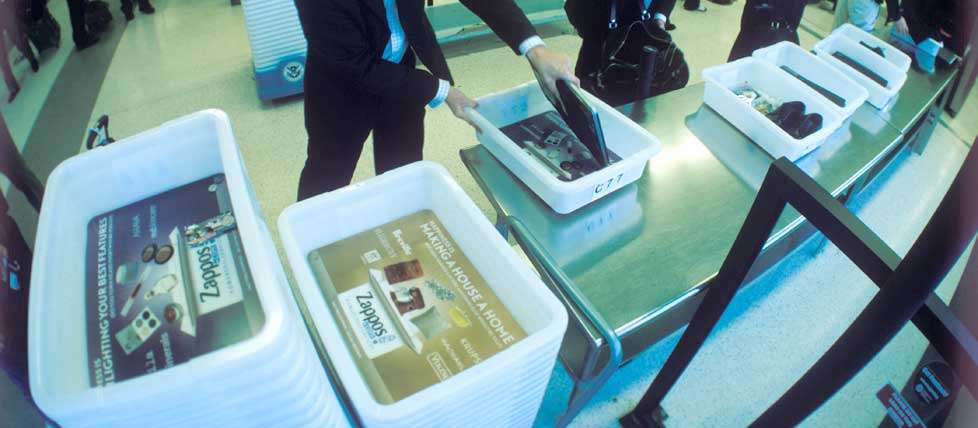
Zappos advertisements in airport security bins.

Outsiders Beware. Your Brilliant Idea Could Be Terrible.

Several years ago, I was standing in the security line at Nashville's airport. I stood there anxiously like the rest of the cattle, with my shoes in one hand and my bag in the other. As I lowered my shoes into the white plastic bin, I noticed a brilliant marketing move. 

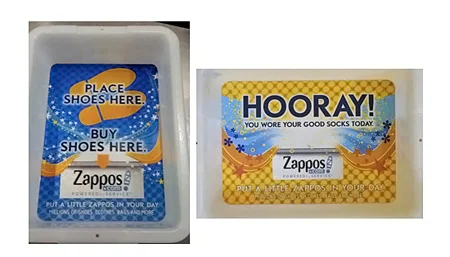
The base of the bin had been lined with an advertisement for Zappos, the online shoe store. Picture placing your old, worn shoes into a bin with an ad encouraging you to order your next pair online. Talk about reaching your target market, right? Brilliant! 

This was the first time I had seen the white, security bin boxes branded. I imagined how many people would see the ads before arriving to their gates. What do people do when they get to their gate? They wait. They hop on their phones, tablets, or laptops, to surf the web before boarding time. I imagined Zappos' sales had spiked as a result.

Photo from http://blog.garrettspecialties.com/2009/05/22/

Photo from http://blog.garrettspecialties.com/2009/05/22/

She shook her head in disagreement and said, "It's terrible."

When I passed the security check, the TSA agent stood behind the conveyor of plastic bins. She looked to me as I picked out my shoes. I told her I thought it was a brilliant idea for ads to be placed in the bins. She shook her head in disagreement and said, "It's terrible."

She explained that since the ads had appeared in the otherwise white bins, passengers were continuously leaving something behind. The ads camouflaged their wallets, passports, purses, and keys. I wondered how many people had to dart back to security in a mad panic after realizing their wallet was left behind. I bet people have even missed flights because of this. I agreed with the TSA agent that it was a terrible idea after all. 

What can seem brilliant in a boardroom can be terrible once rolled out, because there is not enough knowledge about the environment. I don't blame Zappos for this, I still think it was a clever idea. Unfortunately, it has also proved terrible for TSA agents and unsuspecting passengers. 

Can you think of other examples of brilliant, terrible ideas?

How To Test Your Ideas
How to test your ideas

Will your idea fly? How to test your ideas.

Listening to Erik Fisher's Beyond The To-Do List podcast came at a great time, because I am working on some new ideas for my business. His guest was, Pat Flynn, from The Smart Passive Income Podcast and author of the new book, Will It Fly? How to Test Your Next Business Idea So You Don't Waste Your Time and Money.

I'm a big fan of Pat Flynn. Like other podcasters, he shares great advice for internet marketers. However, he approaches things in a very conversational, non-expert style. I am confident in saying that Pat Flynn is an expert in online marketing, but he delivers in a non-pushy or self-inflated ego kind of way. He's a good guy. 

The Beyond The To-Do List interview is about Pat's latest book, Will It Fly?, which is the question every entrepreneur should be asking before launching anything. Pat urges listeners and readers of his book to test their ideas before moving ahead. 

The following are key takeaways from the interview. I encourage you to listen to the full interview for more nuggets of wisdom from Pat and Erik. 

How to test your business ideas.

  • Too many choices will stop you from moving forward. The unknown can cause enough fear for you to give up on an idea before you even test the waters.

  • Get the answer to the question first.

  • Consider the opportunity costs. Mike Stelzner from Social Media Examiner says, "You can't start one thing without stopping another."

  • Don't rush into it. You need to decide on the idea and determine the steps you will need to make to move forward.

  • Understand where the points of failure are.

  • Make sense of your ideas by visualizing them by mind mapping. Check out MindMeister.

  • Pat loves using post-it notes to create the order of his ideas by clumping them, reorganizing, and more. Beth Kanter has an excellent post about facilitating meetings with sticky notes.

  • Figure out the problems you are solving with your idea first.

  • Every great business solves a problem.

  • An entrepreneur is a problem solver.

  • Market research is crucial.

  • Create your market map. Understand what's out there first by using the Three P's.

P: Places. Determine all of the places where your customer is online and offline. 

P: People. Find out who the influencers are in the space who have gained the authority. Use Twitter's advanced search to find them. Use podcasting networks to find them. Refer to the owners of popular LinkedIn Groups.  

P: Products. Figure out what the products are that already exist. You can find a position in the space if you see what is already out there

  • Use Amazon to find the books on the topic and read the three-star reviews. Pat explains that these reviews tend to be the most honest. Reviewers provide the authors with suggestions on how the book could be improved or with new ideas not covered. These are items you can address in your product.

  • Refine your idea after you have done your research.

  • Get a few people to pay for your idea. Tim Ferris talked about validation in his best-selling book, The Four-Hour Work Week.

  • Don't pretend to have a product with a buy now button. Instead, be honest and tell your friends, fans, and followers that you will create the product if you get enough buy-in from them. Ask them to pay up front to show they are truly interested in your idea. Make it a discount price. Include access to your early customers to help you shape what the product becomes.

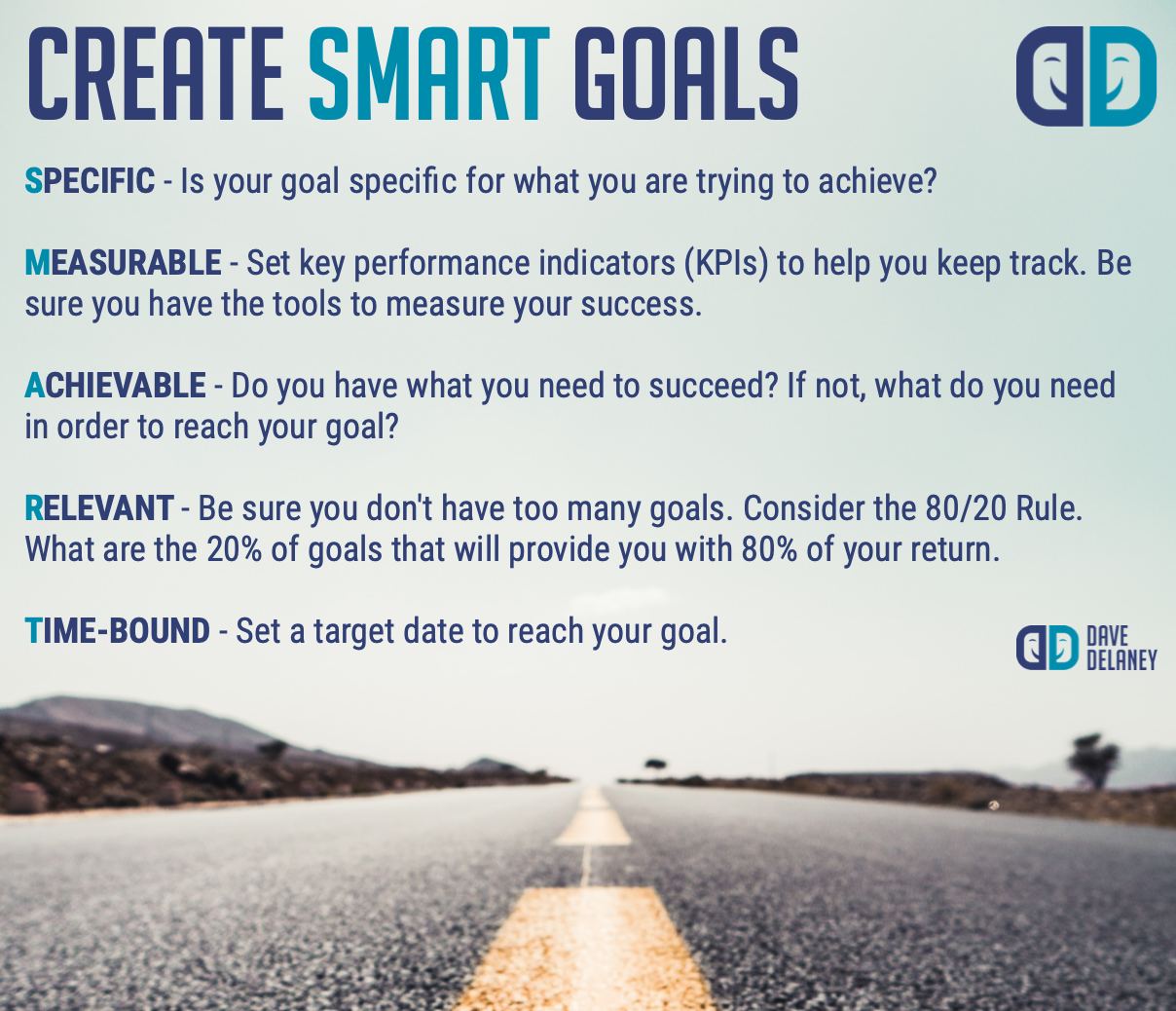
  • Set S.M.A.R.T goals.

  • If you do not meet your goals. You know the product may not be a right fit.

  • Do your homework and validate your ideas.

  • When you have an idea of any kind. Talk about it with people close to you. You might be afraid people will steal the idea, but they won't.

  • The pros of sharing your idea with people far outweigh the cons. The benefits include seeing and hearing the feedback. You get to have them poke holes in the ideas. They will also help you make it better by providing you with new ideas.

  • Share your idea with strangers too. Don't just take one person's opinion. Use this feedback to help you determine whether you should proceed.

  • Consider joining or creating a mastermind group to share these ideas.

  • Onboarding means offboarding other things.

  • You will need to make sacrifices in order to launch your new product. You will have to say no to other things that steal your focus.

  • Make the product your one thing. Make it a healthy obsession.

  • Everything you read and learn should contribute to that one idea.

  • Don't let other things slow down your new idea.

  • Work-life balance is a myth. Don't let your balance teeter too much to one side or the other. Be sure your communication is strong with your loved ones.

  • Share what you are working on with your family, so they are aware. They will understand you will be busy if they know what you are doing. Be sure to refocus your time on them too.

I recommend you hop over to Amazon right now and pick up a copy of Pat Flynn's book, Will It Fly? How to Test Your Next Business Idea So You Don't Waste Your Time and Money

You can listen to the full interview below and grab the show notes at Beyond The To-Do List.

What Do You Want To Be When You Grow Up?
Photo by Dave Delaney. All Rights Reserved.

Photo by Dave Delaney. All Rights Reserved.

My kids are nine and ten years old. For the last several years, I have been recording them on the morning of their birthdays. Each birthday, I use the voice recorder app on my iPhone, to ask the birthday boy or girl one simple question. 

What do you want to be when you grow up?

I have been fascinated with this question since I began to pause and reflect upon my own career, throughout my adulthood. I find the answer to what we truly want to do for a living can often be found in the things we most enjoyed as children. 

When my brother, Mike, was about eight, I performed magic and comedy for his friends at his birthday party. I was probably eleven years old. I was a class clown. I loved making my friends laugh, but the ultimate win was cracking up a teacher. I remember Ms. Hickey once laughing hysterically as she turned to the chalkboard to hide her laughter from the class. She couldn't reveal that I had her busting her gut. 

Years later, I would study improv comedy at Second City. I even had my own improv comedy troupe when I lived in Ireland. Improv is something I've been itching to do again. In fact, I'm (finally) going out this Saturday to see an improv show in Nashville. It only took me eight years living here to finally do this.

I loved creative writing in school. I used to write short stories, poetry, and I wrote in journals religiously. As I got older, the journalling stopped. It's something I have started doing again recently. Of course, I have this blog to share my thoughts with you. I also write on the Futureforth blog, Tennessean newspaper, and in my personal email newsletter (you are subscribed, right?). 

I loved drama class in school too. My earliest memory of performing on stage was doing Little Red Riding Hood in Grade 3. I had been demoted from my role of the lumberjack hero because I had goofed off one too many times in class. Instead, I was re-cast as a tree. I was more of a prop than I was an actor. My direction was to simply tilt my body horizontally as if to collapse slightly as the replacement lumberjack swung his axe into me. From there he would hear Little Red Riding Hood’s desperate yells for help and run to her rescue. 

My parents sank in their seats and my teacher's face became raging red with anger. 

When the lumberjack scene arrived. I stood erect with my arms spread out like a great oak tree. My parents and the audience probably noted my stylish wardrobe of a green turtleneck, dark brown corduroy pants, and trendy Buster Brown shoes. The lumberjack swung his axe into my side, but instead of following my direction, I had a better idea. I slowly fell forward with my face nearly smashing against the stage floor. I fell like a real oak tree wood, “Timber!”.  The audience roared in applause and laughter as my parents sank in their seats and my teacher's face became raging red with anger. 

I love making people laugh. I love being on stage in front of an audience. I know this is why I became a speaker. I always leave the audience informed, but make sure they laugh during my presentations too. There is nothing worse than a dry, boring speaker. 

Recording what Ella and Sam want to be when they grow up is an exercise for their own reflection as they get older. The recordings are private. I have no intention of sharing them with the world. I just want them to realize that as kids, they already have wonderful ideas on what they will be when they grow up. I want them to stay in tune with these ideas as they grow. I don’t want the system to distract them from following their true passions. Sir Ken Robinson has an excellent book called The Element. Robinson wrote, “The Element is about discovering your self, and you can’t do this if you’re trapped in a compulsion to confirm. You can’t be yourself in a swarm.” 

What did you want to be when you grew up?

I bet your favorite duties in your job stem from your childhood passions. Maybe you are lucky enough to do what you have always dreamed of doing. Or maybe you are stuck in a job that has nothing to do with the true you. Take some time to jot down what you wanted to be as a kid. Add the things you enjoyed most as a child. Now ask yourself how you can begin to weave these interests and passions into your work. 

Busted! A Stupid Lie Costs an Applicant a Job

Honesty is the best policy.

I buggered up scheduling a meeting with a client today because I mixed up timezones (sorry Zoe). I apologized to her and told her the truth. My mum taught me that honesty is the best policy. Your mom (or maybe Ben Franklin) probably taught you this too. 

Today, I saw a story on LinkedIn that inspired this post about honesty. No matter how clever you think you are in concocting a lie, you aren't. This lie cost a guy a job and it wasn't even necessary. 

Brian Connors, Managing Director and Co-Founder of AllSearch Professional Staffing wrote this post. 

Never a dull day in Recruiting. A "Professional" Sales/Management Candidate cancelled an interview today because they and child had a bad car accident, child had to go to the hospital. Even sent us the pic. How sad right? Not so fast, Google "bmw car accident" if you will. I guess our only remaining question for this future superstar of business is, just how did you get from the streets of India to a hospital in Atlanta in just 3 hours?!

I had to search the image myself. I use the Google Image Search Chrome extension to easily search any image online.

Honesty is the best policy

Sure enough, I found the original photo on Hindu.com by Sushil Kumar Verma.

"Honesty and integrity are absolutely essential for success in life." - Zig Ziglar. 

Your Biggest Regrets
life regrets

What's your biggest regret? 

A chalkboard was set up in the middle of New York City asking passersby to write down their biggest regrets. As the board filled up, the filmmakers noticed that all of these responses had one alarming thing in common. Do the things you'll regret not doing.

More common life regrets from the blackboard: 

  • Not saying "yes" to things.
  • Being too afraid of failure.
  • Wasting time. 
  • Not going after your dreams.
  • Not keeping in touch with friends.
  • Not finding the time.
  • Just doing plan B.
  • Staying in your comfort zone.
  • Not pursuing your career.
  • Not getting involved.
  • Not speaking your mind.
  • Not following your dreams.

The moral of the story is to treat every day as a clean slate. Do the things you'll regret not doing. 

Take a moment today to jot down your own regrets. Life goes by quickly, consider doing something different today to put you in the right direction. We all need to aim to reduce our regrets. What are you going to do?

The Biggest Business Lie
biggest business lie

When I worked at that gas station, I had a regular customer who always cracked me up. He was an elderly man with a thick British accent. When he came in each week, I would ask him how he was. He would stare up into my eyes from his seat and give me a sly smile. 

"Do you have an hour? I am going to need about an hour or more to tell you how I am. It's a complicated question with a complex answer. I would love to tell you how I am. Will your boss mind if you slip away for sixty minutes to listen to me tell you how I am?" 

I would smile and awkwardly reply that I didn't think that would be possible. He would nod and explain that I should refrain from asking how he was doing if I didn’t really want to know the answer. I always laughed and appreciated his candor. 

The Business Rhetorical Question

The biggest business lie is the one you answer when someone asks you how your business is. I have heard this question hundreds of times at networking events and conferences. The answer we always hear is that business is great, we are very busy. It's a lie. 

The truth is that most people wouldn't attend networking events or conferences if business was booming. They attend to meet new people and hopefully land new business, and that's perfectly fine. That's part of what networking is all about.

I love Chris Brogan's take on the "busy" answer. He's not busy, he's blessed

Maybe the next time someone asks you how your business is you should be honest. Tell them you are seeking a new client. They may be able to provide you with an introduction, or perhaps they can hire you. Just don't take sixty minutes to answer their question.

Knock on Some Doors
knocking on doors sales

I am currently writing this from a small town north of Toronto, Ontario. I had lunch with an old friend who is a steel salesperson today. He spends his time driving from metal shop to metal shop across the province meeting with owners to close sales and build his network. He is old school and it works for him.

I asked him for his advice on how he makes sales and he told me to knock on some doors.

Most of my business at Futureforth comes from word of mouth. The trouble is, I sometimes depend on it too much. Instead of knocking on doors, I wait for the business owners to knock on mine. It doesn't sound very proactive, right? It isn't.

Instead of driving back to his office after our lunch, he was going to pop into a few businesses he noticed as he drove to meet me. He literally will walk in unannounced and introduce himself. He's not a pushy, sales guy. He simply wants to meet the owners and get on their radar. 

People do business with those they know, like and trust.

He will ask the owners if they need any steel now. If so, he will offer to get a quote. If the owner says no, he will suggest that he give them a quote to share his prices. My friend is a charming, good guy. He's not a slick, sales jerk. 

His main goal is to make people like him. He reminded me that people do business with those they know and like. If they like him, they will decide to give him a chance for business. Once he makes a sale, he's in with that new customer. 

It all starts with knocking on some doors. It was a good reminder for me to do the same. How about you?

The Secret Power of a Free Slice of Pie
Photo from Flickr by C.C. Chapman.

Photo from Flickr by C.C. Chapman.

One thing you will learn about me by subscribing to this blog is I have had many jobs in my life. I love sharing stories about them, like fending off jerks at gas stations. I have also worked at many bars and restaurants over the years. This story is about a lesson I learned as a server that you can apply to your business. 

I once worked for a restaurant/folk bar / Jewish buffet/club in Toronto called Free Times Café (still going strong). Like many restaurants and bars in T.O., this one is in an old home. It is decorated with funky lamps and mismatched tables and chairs. It has a cool, eclectic, artsy vibe. 

Nights for me were filled with folk music and serving beer; Sundays had live Klezmer bands and enough latkes and blintzes to make anyone cry, "Oy!". I also had busy weekday lunches, serving neighboring office workers and college students. At Free Times, I learned the secret power of a free slice of pie. 

The Secret Power of a Free Slice of Pie

One weekday, I was serving a table of four women over lunch. One of the women was annoyed because her meal came out much later than the other three. The kitchen was backed up, a mistake was made with her order, and she had to wait and eat after her friends had dug into their dishes. 

As a server, you have only a few things to get right to serve people. Getting the orders correct and high-quality is essential to ensuring customers are happy. In addition, smiling and remembering names always helps. Going that extra mile in any way possible will ensure a nice tip. 

The hungry woman was angry about the situation. I couldn't blame her. There she sat, salivating, as her colleagues pigged out. I knew the secret to making everything good again - the pie. 

We usually had two different cakes or pies each day of the week. The server's job was to pretty up the plate and up-sell them to customers. A slice of pie already looks nice, but add a little syrup, whipping cream, and a dusting of cinnamon or chocolate powder, and boom! That's a fine-looking dish. 

One dollar earned us a lifelong customer.

After clearing the woman's plate, I delivered a delicious-looking pie plate. I apologized for the mix-up in the kitchen and exclaimed dessert was on me. Her anger changed to joy as her eyes lit up in elated delight. Her companions all burst out with a supportive laugh. All was good in the world again. The event made the lunch a positive and memorable experience. 

Not only did the lady leave happy, but she returned several times each month for lunch with friends. One of her colleagues returned for lunch soon after. She sheepishly admitted she had hoped I would mess up her order so she could get the free pie, too. 

One free slice of pie cost the house less about a buck. One dollar earned us a lifelong customer. I would say it was worth every cent.

What can you offer your disgruntled customers to make things great again? It probably won't cost you as much as you think. 

50 Takeaways From Blue Ocean Strategy

We have challenged one another in the NBN Club to read two books each month for the year. You may scoff at the simple quest of reading twenty-four books in a year, but to me it is a challenge. What can I say? I am a slow reader. 

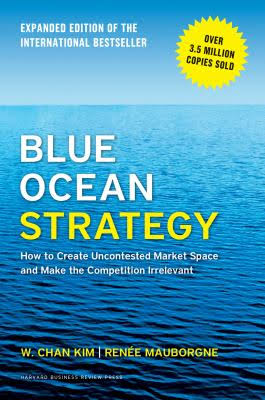
My first book of the new year is Blue Ocean Strategy, Expanded Edition: How to Create Uncontested Market Space and Make the Competition Irrelevant by Renée Mauborgne and W. Chan Kim. Blue Ocean Strategy presents a systematic approach to making the competition irrelevant and outlines principles and tools any company can use to create and capture their own blue oceans. Cirque du Soleil and Curves are two such companies that have created their own blue ocean businesses. As I read the book, I pictured Julien Smith's Breather as a great example as a company that found a blue ocean.  

The following are fifty takeaways from the book. I recommend reading the book in its entirety to fully grasp each point. The takeaways include points and questions you should consider regarding your own business. It definitely made me rethink some aspects of my digital marketing consulting business, Futureforth.

50 Takeaways From Blue Ocean Strategy

  1. The only way to beat the competition is to stop trying to beat the competition.
  2. Value innovation occurs only when companies align innovation with utility, price, and cost positions.
  3. …those that seek to create blue oceans pursue differentiation low cost simultaneously. 
  4. the creation of blue oceans is about driving costs down while simultaneously driving value up for buyers. 
  5. Effective blue ocean strategy should be about risk minimization and not risk taking.
  6. …you must begin by reorienting your strategic focus from competitors to alternatives, and from customers to non-customers of the industry.
  7. Every great strategy has focus, and a company’s strategic profile, or value curve, should clearly show it. 
  8. By applying the four actions of eliminating, reducing, raising, and creating, they differentiate their profiles from the industry’s average profile.
  9. A good tagline must not only deliver a clear message but also advertise an offering truthfully, or else customers will lose trust and interest. 
  10. …companies must understand how to read value curves. 
  11. Rarely do sellers think consciously about how their customers make trade-offs across alternative industries.
  12. What are the alternative industries to your industry?
  13. By looking across buyer groups, companies can gain new insights into how to redesign their value curves to focus on a previously overlooked set of buyers. 
  14. What is the context in which your product or service is used? What happens before, during, and after? Can you identify the pain points? How can you eliminate these pain points through a complementary product or service offering?
  15. If you compete on emotional appearance, what elements can you strip out to make it functional? If you compete on functionality, what elements can be added to make it emotional?
  16. The process of discovering and creating blue oceans is not about predicting or preempting industry trends. 
  17. Focus on the big picture, not the numbers.
  18. …the strategic profile with high blue ocean potential has three complementary qualities: focus, divergence, and a compelling tagline. If a company’s strategic profile does not clearly reveal those qualities, its strategy will likely be muddled, undifferentiated, and hard to communicate. 
  19. A company should never outsource its eyes.
  20. A company’s pioneers are the businesses that offer unprecedented value.
  21. They should use innovation because, without it, companies are stuck in the trap of competitive improvements.
  22. Reach beyond existing demand.
  23. Do you seek out key commonalities in which buyers value?
  24. Non-customers tend to offer far more insight into how to unlock and grow a blue ocean than do relatively content existing customers. 
  25. What are the key reasons first-tier non-customers want to jump ship and leave your industry?
  26. Harboring within refusing non-customers, however, is an ocean of untapped demand waiting to be released. 
  27. …by looking to second-tier non-customers and focusing on the key commonalities that turned the away from the industry.
  28. What are the key reasons second-tier non-customers refuse to use the products or services of your industry?
  29. …explore whether there are overlapping commonalities across all three tiers of non-customers. 
  30. …retrain existing customers and seeking further segmentation opportunities.companies need to build their blue ocean strategy in the sequence of buyer utility, price, cost, and adoption.
  31. Does your offering unlock exceptional utility? Is there a compelling reason for the mass of people to buy it?
  32. Is your offering priced to attract the mass of target buyers so that they have a compelling ability to pay for your offering?
  33. Can you produce your offering at the target cost and still earn a healthy profit margin?
  34. The last step is to address adoption hurdles. What are the adoption hurdles in rolling out your idea?
  35. Yet it did so many different tasks that people count t not understand how to use it. 
  36. Unless the technology makes buyers’ lives dramatically simpler, more convenient, more productive, less risky, or more and fashionable, it will not attract the masses no matter how many awards it wins. 
  37. Create a strategic profile that passes the initial litmus test of being focused, being divergent, and having a compelling tagline that speaks to buyers. 
  38. To secure a strong revenue stream for your offering, you must set the right strategic price.
  39. It is increasingly important, however, to know from the start what price will quickly capture the mass of target buyers. 
  40. People will not buy a product or service when it is used by few others. 
  41. …the strategic price you set for your offering must not only attract buyers in large numbers but also help you to retain them… an offering’s reputation must be earned on day one, because brand building increasingly relies heavily on word-of-mouth recommendations spreading rapidly through our networked society. Start with an offer that buyers can’t refuse.
  42. They key here is not to pursue pricing against the competition within an industry but rather to pursue pricing against substitutes and alternatives across industries and non industries. 
  43. To hit the cost target, companies have three principal levers. 
  44. Partnering, however, provides a way for companies to secure needed capabilities fast and effectively while dropping their cost structure. 
  45. A business model built in the sequence of exceptional utility, strategic pricing, and target costing produces value innovation.
  46. In every organization, there are people, acts, and activities that excretes a disproportionate influence on performance.
  47. People remember and respond most effectively to what they see and experience: “Seeing is believing”.
  48. Numbers are disputable and uninspiring.
  49. Showing the worst reality to your superiors can also shift their mindset fast. 
  50. You must create a culture of trust and commitment that motivates people to execute the agreed strategy - not to the letter, but to the spirit. 

Have you read Blue Ocean Strategy? Did it make you rethink your business? 

I'm always on the lookout for my next books to read this year. Please leave a comment with your favorite business books. 

I Am Glad I...
Photo by María Victoria Heredia Reyes. 

Photo by María Victoria Heredia Reyes. 

I wrote yesterday about a regret I have. We all have regrets. Don't lie and say you don't. I have been thinking about this lately because I sometimes compare myself to others I admire. Once again, something I shouldn't do, but I do - you do it too. 

Heather has girlfriends she gets together with once a year who she met in college. I always hear stories from friends about their college days. I get envious and I wish I had done the same thing, but I didn't. 

I Wish Had...

Fill in the blank, I wish I had ________________________________________________. Now replace "I wish had" with "I am glad I". 

I Am Glad I...

I am glad I went to university for night classes and on weekends because I approached it in a much more mature way. I built relationships with faculty who I am still in touch with today. I excelled in my classes because I took them so much more seriously than I would have out of high school. I did it while I worked during the day and while Heather was pregnant. I remember it fondly. 

I wish I had become a speaker, so I would be in as much demand as some of my peers like Scott Stratten, Mitch Joel, and Chris Brogan

I am glad I waited to become a speaker until later because I am much more rehearsed and knowledgeable about the topics I speak on now. I am glad I didn't speak before studying improv with Second City, because I know how to read an audience and deliver content that leaves them thinking, inspired and laughing. 

What about you? 

I Wish Had... 

I Am Glad I...

Don't Make This Workplace Mistake
Photo from Flickr by Guian Bolisay

Photo from Flickr by Guian Bolisay

We all make mistakes at work. Hopefully, they are never serious enough to get you fired. I made my share of mistakes at the companies I have worked for. Thankfully never anything big enough to get me fired (or even reprimanded - much). My biggest mistake had nothing to do with the work. 
My friends will be surprised to learn that I'm more introverted than I let on. People know me as an outgoing guy, usually high-energy, and fun-loving. This is true, mainly around people I know, or when I'm in a situation where people want to speak with me. It is probably part of the reason why I absolutely love to speak at conferences and corporate events.

I regret this...

My mistake when I worked with people was I would choose to eat alone. Heck, Keith Ferrazzi and Tahl Raz even wrote a killer networking book entitled, "Never Eat Alone". The truth is that I did too often, and I regret this. 

“Wherever you are in life right now, and whatever you know, is a result of the ideas, experiences, and people you have interacted with in your life,” - Keith Ferrazzi and Tahl Raz. 

When I would eat solo it would usually be in my car, hidden on a residential street where nobody would find me. I would gobble down my lunch listening to a podcast, reading a book, and writing in my journal. I clearly remember reading Chris Guillabeau's "The Art of Non-Conformity" over Publix sushi in my old Subaru Forester. His book helped me as I moved on to work for myself. 

When I did eat lunch with my co-workers, I would always enjoy their company. We would have plenty of laughs and it would be fun, but I didn't do it enough. Do you?

Your Lunch Challenge

Ask your colleagues to lunch tomorrow. Do this because you want to get to know them better. You probably have more in common than you know. You might find an opportunity to help them with a work-related project. You may even become friends outside of the office, so when you leave the company (and most of us eventually do) you can still keep in touch. Maybe you will meet up over lunch.

This #KillerCalendar Will Save Your Life
My #killercalendar

Ok, maybe not save your life, but it will greatly improve it. This isn't a productivity blog, and yet I keep finding myself writing about the topic. I suppose it's because it is the new year. Everyone (including myself) is pumped about improving their lives. As for productivity, be sure you are following smart people like Mike Vardy, Erik J. Fisher, David Allen, and Michael Hyatt (whose calendar idea I borrowed for this version). 

My Killer Calendar

I want to introduce you to an idea that is working for me to stay focused. It's also helping me to reevaluate how I am spending my time. The idea is my Killer Calendar. Don't worry, nobody dies. 

I balance many different projects at once. I have incredible consulting and coaching clients at any given time. I also need time to write content here and in the Nice Maker. I also carpool to get the kids to school, gymnastics, clubs, etc. And then there is Max at my side, who seems to always be anxiously ready to head outside for a pee.

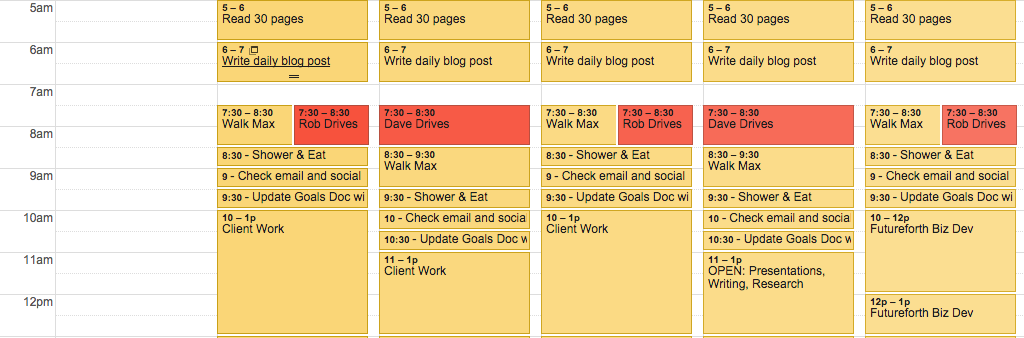
My Killer Calendar has helped me to stay focused by dividing my time into specific chunks dedicated to different topics such as, Client Work, Business Development, Family.

3 Steps to Create Your Killer Calendar

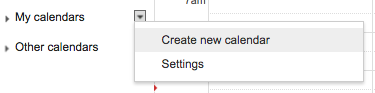
1. Along the left side of the Google Calendar interface, you will see My calendars and Other calendars that you are subscribed to. Turn them all off by clicking the box next to each one. Your calendar should be blank.

How to create a calendar in Google Calendar

2. Create a new calendar and call it  "My Killer Calendar". 

2. Add general daily areas of work you need to do, these should seldom change. This isn't a to do list, for that, grab my daily goals worksheet. Carve out blocks of time for each item. You could have sections like, Gym, Team Meeting, Client Work, Personal Development, etc.

Tip: It helps to make these reoccurring in the calendar, so you don't have to create a new item for each day manually.

Here's my Killer Calendar for weekday mornings. 

My Killer Calendar

3. Along the left side of the Google Calendar interface you can select different calendars. Turn your regular calendar back on, so you see how your work week compares to your Killer Calendar. Moving forward, you will adjust your regular calendar to be sure it fits your Killer Calendar template.

The Killer Calendar will help you know what you should and shouldn't be doing each day. It will also help you realize how you can adjust your life to make up more time in a day.

I have decided to shorten my walks with Max on days I drive the kids to school from 60 minutes to 30 minutes. I also now eat breakfast with my kids, and I shower as they are getting ready. This saved me another 30 minutes. I have adjusted my Killer Calendar to reflect this, and now have an extra hour to work on my clients on Tuesdays and Thursdays. Win!

I recommend you print your Killer Calendar, so you can review it through the day to be sure you are staying focused. Mine is taped to my wall over my desk. I aways find printing items helps me get the work done, which is why I made my Daily Goals worksheet for you. 

Do you do this too? If you try it, let me know how it works for you.

10 Tips to Choose Yourself from James Altucher
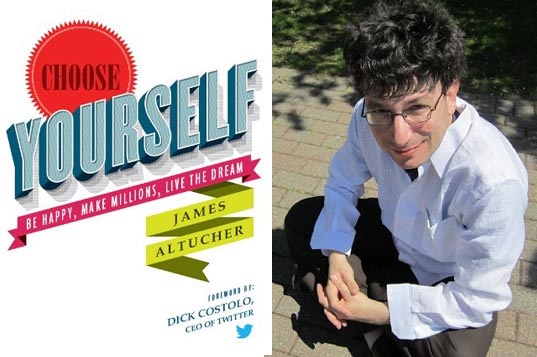
James Altucher

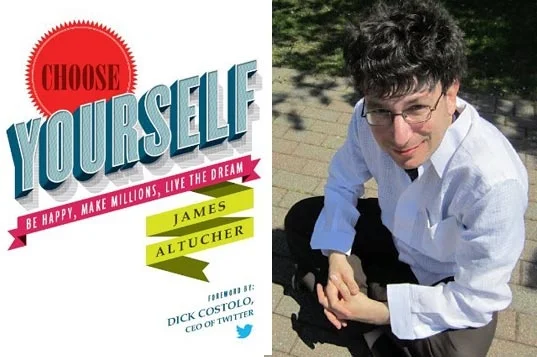
One of my favorite people (who I have never met) is James Altucher. James is a serial entrepreneur and investor who has had big wins and plenty of failures throughout his career. I like his somewhat kooky approach to life. I’m somewhat kooky too, so he appeals to me that way. He’s a big fan of comedy, I am too. He writes from the heart, I do too. He’s had some dark days in his life, moi aussi. 

James’ blog is prolific and his podcasts are always enjoyable. I enjoy listening to his amateur sounding interviews with his stellar guests and amazing questions. You can tell he listens intently and truly gets excited by his guests. I don’t mean amateur in a negative way. I mean that he comes across sincere, with a voice unlike professional broadcasters. That’s what podcasting is all about. 

James has written several amazing books, but the one that has impressed me the most is Choose Yourself. The following are ten takeaways that stuck with me from the book. Consider each point for your own life.

10 Takeaways From Choose Yourself

1. Every second, you have to choose yourself to succeed.

2. Rejection - and the fear of rejection - is the biggest impediment we face to choosing ourselves. 

3. Only think about the people you enjoy. Only read the books you enjoy, that make you happy to be human. Only go to the events that actually make you laugh or fall in love. Only deal with the people who love you back, who are winners and want you to win too.

4. The past and future don’t exist. They are memories and speculation, neither of which you have any control over.

5. What does purpose mean when we are dead? We might as well choose to be happy now.

6. Think of two people in your network who don’t know each other but you think can add value to each other’s lives (I added this idea to my daily goals document). 

7. All you have to do is stay in the present. When you catch yourself upset about the past or worried about the future, say to yourself, “Ah, I’m time traveling,” then STOP.

8. If you don’t promote yourself, nobody else will. 

9. We only ever remember the things we are passionate about.

10. We never learn when we are talking. We only learn when we are listening.

Bonus: Pretend everyone was sent to this planet to teach you.

I recommend you pick up a copy of Choose Yourself today. Get started.

What book have you read this year that left you inspired? Leave a comment, I would love to learn more about the books that mean something to you. 


Six must-know tips to work from home
Your couch is dangerous

Part of the purpose of this blog is for me to share things I have learned about being an entrepreneur who works alone. While I’m not a huge fan of the word “solopreneur,” it does encapsulate my work life. I also work from home, so if you do, too, this post is for you. 

Six tips for people who work from home - people like you. 

1. Your couch is dangerous.

Ella was sick, she was home from school with me for a few days recently. She spent the day on the couch watching tv, reading, and resting. I spent the day next to her on my computer. When she returned to school, I worked for two more days from the couch. My back was aching, and I felt much less productive. The couch is a symbol of laziness and procrastination. 

If you work from home, you must carve out your corner. Set up an ergonomic workspace that is distraction-free. Avoid the couch at all costs (unless it’s to console your sick kiddo). I’m back in my office now and feeling much better. 

2. Schedule time daily to use social media to connect with people.

I’ll be the first to admit that social media can distract from getting the work done. However, if you are genuinely being social, it’s not a bad place to pop into. If you work alone, you need interaction throughout your day. People need people. Allocate a little time through your day to log into Facebook, Twitter, or LinkedIn to say hello. See what your friends are up to and meet some new people. Use an app like Freedom to switch off access to social networks when your time is up. 

3. Beware of the kitchen. 

When you work from home, your fridge is close - too close. Making snacks is a form of procrastination. Your kitchen equals lost time and gained weight. If you must stretch your legs (and you should), pop into your kitchen for a quick glass of water instead. Staying hydrated is essential, and your increased bathroom breaks will get you up for a stretch. 


4. Stretch!

https://spinecenterbr.com/simple-stretches-to-relieve-back-pain/

Take breaks every hour to stretch. Reach for the sky, reach down to your toes, and get up! The best thing about working from home is nobody hears your grunts as you get into the downward dog position on the floor.  

5. Find a professional lunch or breakfast group you can join or start your own. 

Find a good group of professionals who you can network with. I wrote all about this in my book, New Business Networking. Getting out of your house to meet people is a positive way to spend some time each week or two. If you can’t find a group to join, consider starting your own

6. Reward yourself.

When you work for a decent company, rewards are given for meeting milestones. Do the same for yourself. Set your goals and get to them. If you meet your monthly goal, reward yourself with a movie or a hike. Do something for the fun of it because you deserve it. 

Working from home isn’t always easy. Staying productive is vital. Time is your most precious commodity and a terrible thing to waste. 

FREE DOWNLOAD: The Daily Goals Worksheet

It feels like it is impossible to stay focused when you work online. We get distracted by social media, email, and cat videos all of the time. When my computer isn't distracting me my iPhone is. I expect you get distracted too. I found a simple productivity tool that works, which I have made available to you here. It's the new and improved, Daily Goals Worksheet. Prepare to conquer your to do list, rock your goal setting, and achieve your personal goals and business goals.

I have used countless apps and software to help me get the work done, but I fail too often. The main problem is each time I have to open an app, I get distracted by something else on the device. I'll see a notification, status update, or my mind will wander and force me to open Reddit.

Last year, I came up with a solution to help me stay focused. It involves three ingenious innovations: paper, pen, and coffee (coffee is optional). 

My Daily Goals worksheet is simple. You print a copy for each day of the week from Monday to Friday and use a slight variation for Saturday. Print it, fill it out, and keep it in front of you all day. That's the most important part (next to filling it out) - keep it where you can see it. 

How to use the Daily Goals

8 Steps to Your Daily Goals Worksheet.

1. Sunday night decide what you need to achieve by the end of the week. Fill in this main goal for each day. This should be the same thing on each page. 

2. Decide what your main goal is for the end of the month. Keep this the same, so you can be laser focused.

3. Add each day of the week. The main document is for Monday - Friday, the other is just for Saturdays. 

4. Add a dollar sign in the box on the left if this item will earn you money. This helps you stay focused on what feeds your family (and buys you coffee).

5. Notice the "P"? The P stands for "personal". Each day of the week, add two personal goals. For example: exercise for thirty minutes, read for one hour, play soccer with junior, write a chapter, cook dinner.

6. Try to introduce two people in your network each day. Everybody knows someone who is looking for a job or is hiring. Perhaps these are people who should know one another because of similar interests. Look at your email and LinkedIn for ideas.  

7. The "B" stands for "business". Each day of the week, add six business goals. For example; follow up with John Doe, update expense report, review analytics. 

8. The tick boxes on the right are for ticking off what you get done. Feel the complete satisfaction of using a pen to check mark this area when you get the work done. You will get the work done.

On the Saturday page you will notice a slight variation. There are two business goals and six personal goals. Focus Saturdays on yourself. There is no page for Sunday. Go outside and play, get to a new movie, watch football. You have earned your free Sundays.

I know we all get interrupted. Distraction happens even with a printed daily goals worksheet in front of you all day. When you do get distracted, look back down on your desk, or up to your whiteboard or mirror (or wherever you stick your daily goals worksheet). Focus on your goals and get back to work. 
Let's make this year your most productive year yet. If you find this helpful, please share it with your friends and colleagues. 

Now go download your daily goals worksheet to get started. 

How to Fend Off a Jerk
No, this is not me. 

No, this is not me. 

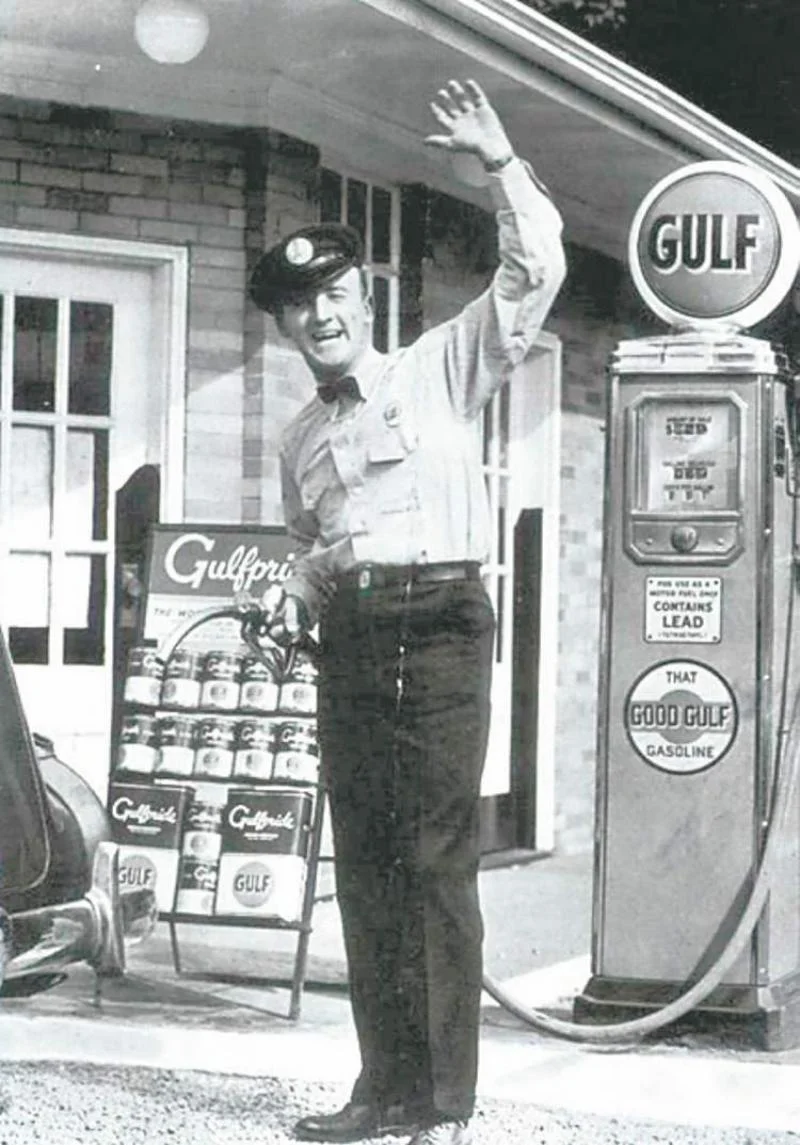
When I was fifteen, I worked for a full-service gas station and auto repair shop. I know what you're thinking (unless you're in New Jersey or Oregon), "what is a full-service gas station?" Yes, there was a time when a smiling gas jockey would greet your car and fill up your gas. You didn't even need to step out of your vehicle.

Most customers were nice, many even tipped me. One day, a guy in his early 30s pulled up in a Porche with more attitude than his car. He rudely told me to fill it up, check the tires, check the oil and levels, and "clean my windows, kid". I did all of the above and returned to his window when the gas stopped filling. 

I politely asked him for the total amount due. He glanced at his window shield and grunted, "You missed a spot." I sighed and grabbed the squeegee to do his entire window again. When I returned to the customer he told me to clean his headlights. It was obvious he was on a power trip, and I could do nothing but oblige him. I grabbed the squeegee and wiped down his headlights. 

He didn't say a word as he paid me for the gas. He didn't thank me, he didn't even look at me. Then he screeched off the lot into the night. 

I returned to the office and was clearly angry. My boss, Ed, noticed my sudden mood change. When he asked me what happened, I explained the guy was a jerk. He just smiled and sat me down.
Ed gave me some of the best customer service advice I have ever received. This is something I've used in many jobs over the years. When someone is clearly trying to antagonize you, act happy. The worse they get, the happier you get. 

Gas Jockey

I took Ed's advice on a future customer who was attempting to piss me off. Each time the customer was rude to me, I was friendlier to him. To the point that he was exasperated from trying to get a rise out of me. It was hilarious because I was completely over-the-top friendly - my smile was ridiculously wide.

The results will leave you laughing. 

When I returned to the office, I was laughing out loud. The jackass didn't get me in a bad mood, far from it. I was in an even better mood than before dealing with him, because I won. He couldn't have complained about me being too nice! 

Try this the next time someone is obviously trying to get you annoyed. Smile, act happy, agree with everything he says to you. The results will leave you laughing. 

Working on a Toilet

I was listening to Marc Maron's WTF podcast. He was interviewing comedian and comedy writer, Brian Kiley. Kiley has been a writer for Conan O'Brien for more than 20 years. He is a tremendously successful comedy writer, but it wasn't always that way. 

He explained to Maron how he used to go out of his way to visit a local library to watch old footage of his favorite comedians. This was way before YouTube and this whole internet thing. In order to master his craft, he had to make a point to study the greats.

Brian Kiley

Kiley described how he once shared a small apartment. In order to stay up late writing jokes, he would go to the bathroom and sit on the toilet lid. It was the only source of light he could use without waking up his roommate. Sometimes his roomie would knock on the door to actually use the bathroom. 

It cracked me up how Kiley said he now does the same thing when he is with his family in a hotel room. He uses the toilet as his chair and the bathroom light for reading and writing, so he won't wake anybody up. 

Sometimes you need to take the extra steps to get the work done and to become the best at what you do. Even if it means working from a toilet in the middle of the night. 

Check out the full episode of the podcast. Maron also interviews Brian Posehn, who I love! 


I'm Giving Up
Illustration by hikingartist.com.

Illustration by hikingartist.com.

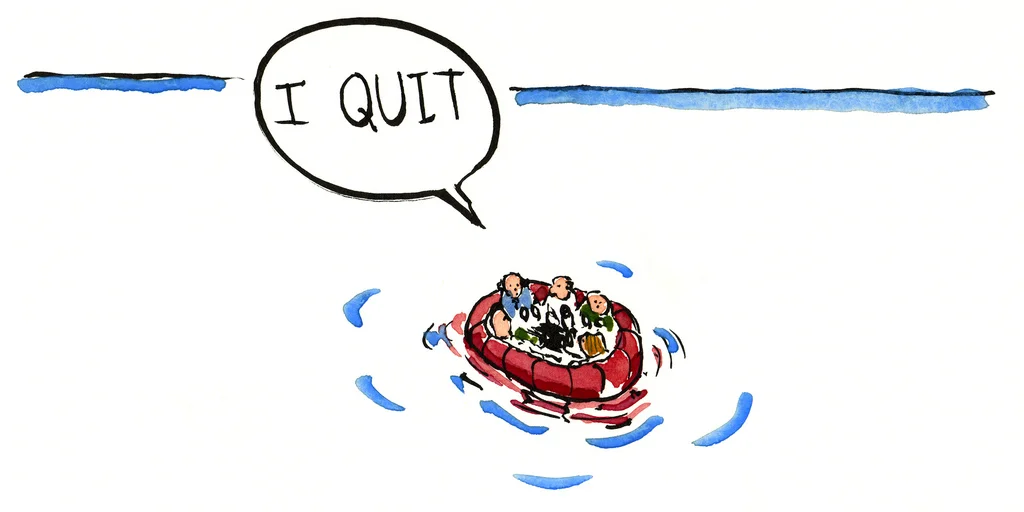
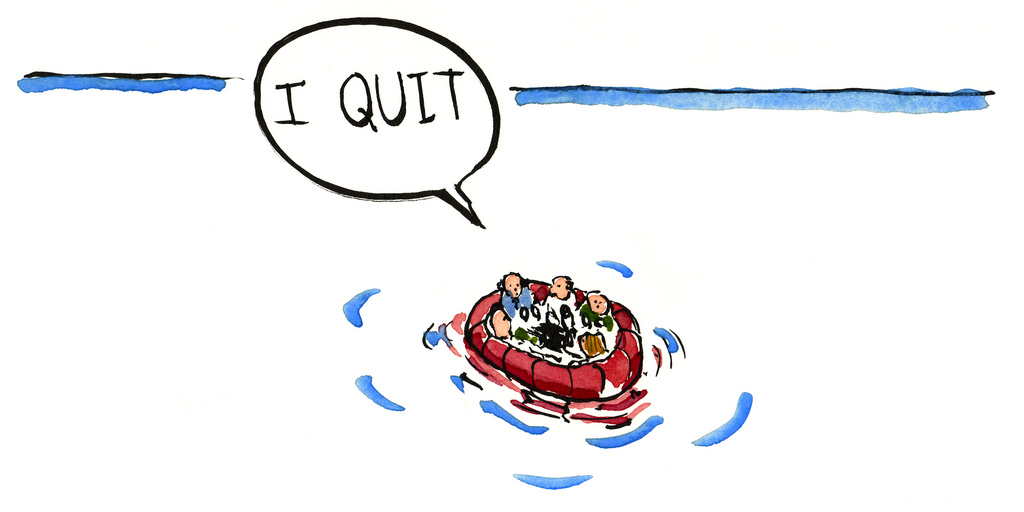
I'm giving up.

We all feel like this some days. No business runs perfectly all of the time. We all have the down periods - I have definitely had some.

I remember working at a restaurant years ago. As a server, I relied on the tips I would earn from my customers. No customers meant no tips. Every so often, for no apparent reason, we would have a dead lunch or dinner. It sucked, but I did't quit. The next shift was always better. 

Since launching Futureforth, I have found the same to be true. If I have no clients, I have no money. That's a scary proposition. I have had good months and no-so-good months, but I didn't give up. 

"Before success comes in any man's life, he's sure to meet with much temporary defeat and, perhaps some failures. When defeat overtakes a man, the easiest and the most logical thing to do is to quit. That's exactly what the majority of men do." - Napoleon Hill

Understand that all businesses have good and bad periods. Sometimes you need to reevaluate and even pivot what you are doing. We all go through this. 

I absolutely love working on my own terms. Solopreneuriship gives me the ability to serve my clients and my family. Not every month is a good one, but I have found that giving up won't get me further ahead. 

What keeps you going when business is slow? What stops you from giving up?