
The Echo of Unspoken Thoughts
During my morning walk, I realized something significant: I have a subconscious habit of negative self-talk that nearly hijacked my mood. I’ve had a great week, and I pushed myself to attend two networking events for British healthcare startups in Nashville. Both were interesting, and I enjoyed meeting so many new people and running into old friends and colleagues. I’ve been feeling relaxed and content with life.
I shouldn't be relaxed; business isn't where it needs to be.
But as I walked and recorded a voice memo to myself about that contentment, a counterthought immediately bubbled up: "I shouldn't be relaxed; business isn't where it needs to be."
I mindfully caught myself. I chose not to utter those words, knowing that verbalizing a thought gives it a different kind of life, perhaps even a manifestation. In my communication training work, I teach that speaking information aloud helps with retention, like repeating a person’s name to remember it. If that’s true, then speaking our anxieties aloud must "enforce" them in our neural pathways, increasing imposter syndrome and self-doubt.
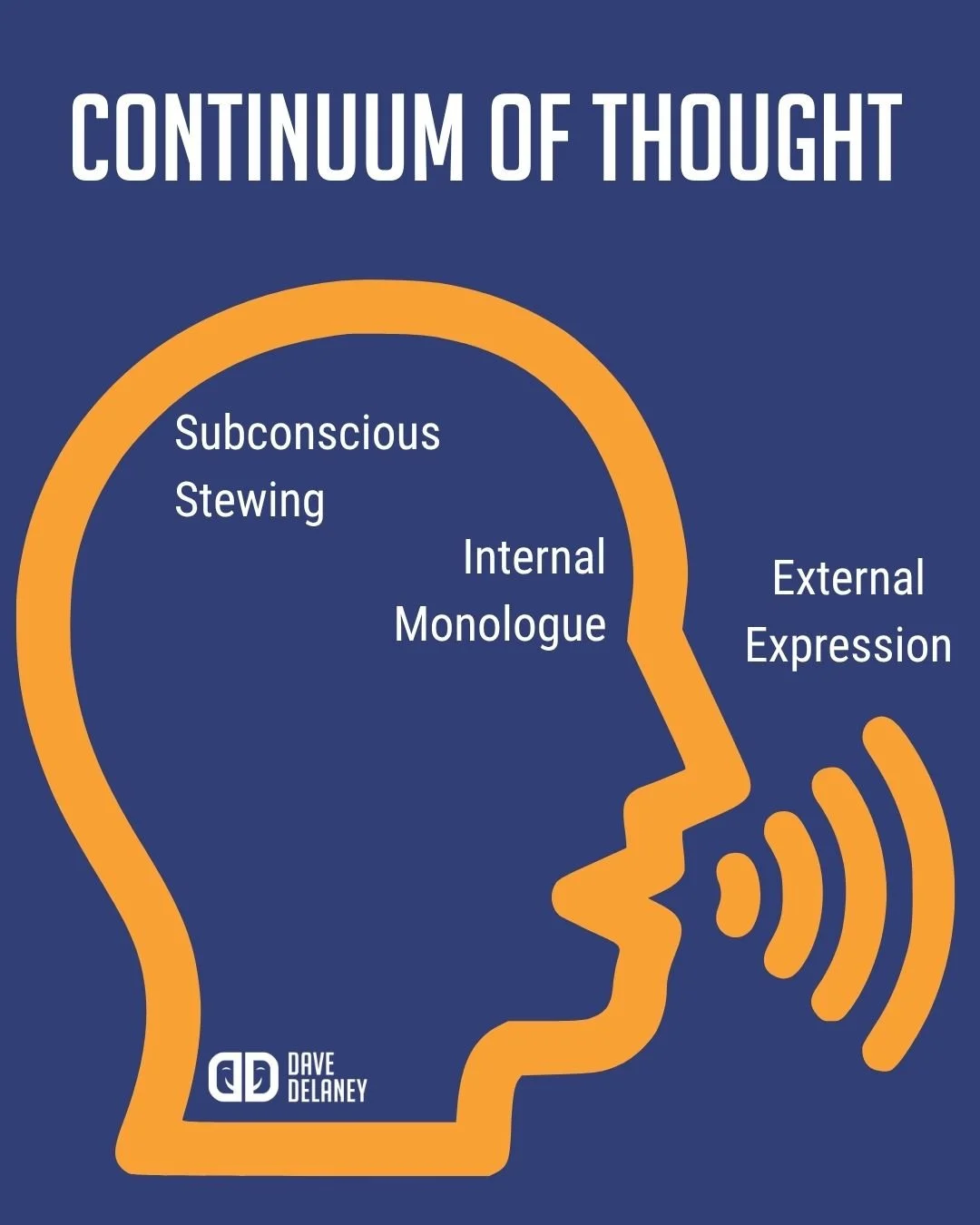
This led me to a theory on the "Continuum of Thought":
Subconscious Stewing: Deep-seated, quiet negativity.
Internal Monologue: Conscious negative self-talk.
External Expression: Verbalizing the negativity, bringing it into reality.
I wonder if the process works in reverse. By mindfully "censoring" external talk, do we eventually quiet the internal monologue and, finally, clear the subconscious stew? It’s a question I’d love to share with my Wise Squirrels guests and pose to a neurologist, behavioral psychologist, or an expert in Buddhism like Joseph Goldstein.
I believe we are winning when we mindfully curb negative self-talk and speak to ourselves as a close friend. Perhaps the more we can catch negative thoughts and externalize them in a positive way, the more likely we are to slow, or even stop, that stinking subconscious stew.